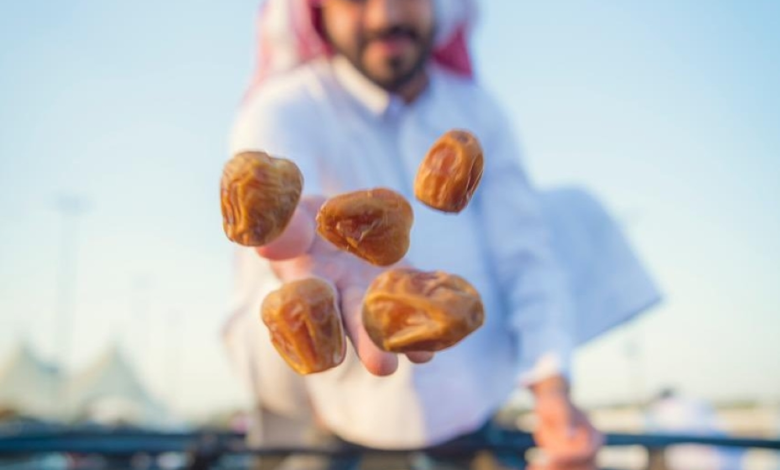

Saudi dates, in their various high-quality varieties, constitute a strategic economic and cultural resource for society, and a direct contributor to achieving the goals of Saudi Vision 2030 by supporting the national economy.
The Saudi date industry has expanded beyond the local market to reach more than 120 countries around the world, registering a qualitative leap in the volume of exports, which amounted to a total value of about 1,695 billion riyals.
High quality dates
The National Center for Palms and Dates explained that the agricultural diversity in the Hail, Al-Jawf, and Asir regions results in the production of 33 high-quality local varieties of dates.
These varieties enjoy a prominent presence on Saudi Ramadan tables due to their high nutritional value and health benefits, making them the preferred choice for consumers during the holy month.
The center revealed in its data that the total production volume in the three regions exceeds 157,000 tons annually, supported by a large and sustainable agricultural infrastructure.
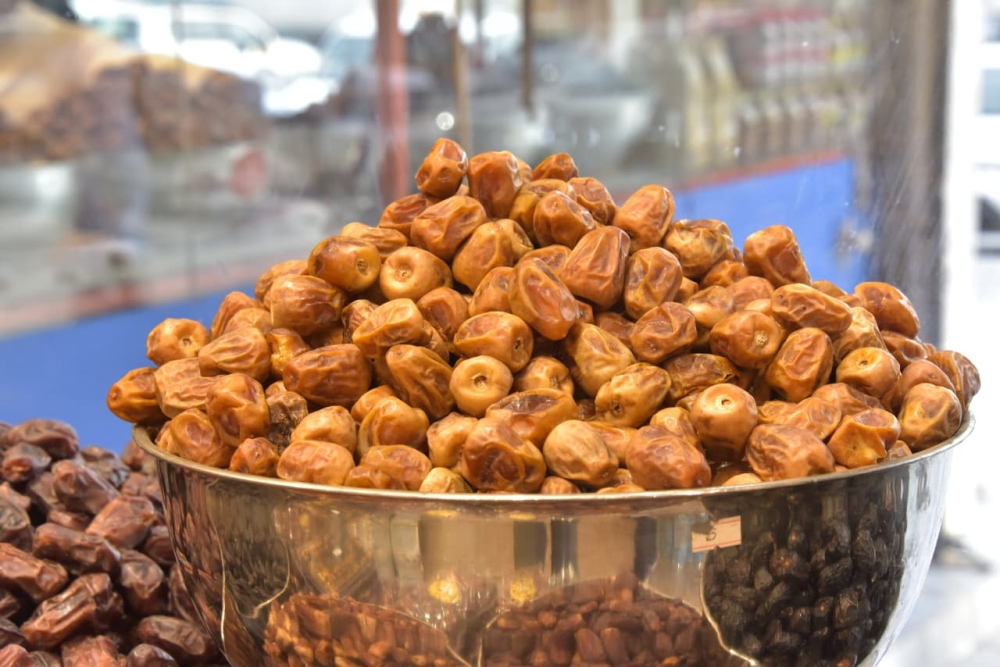
Agricultural map of dates
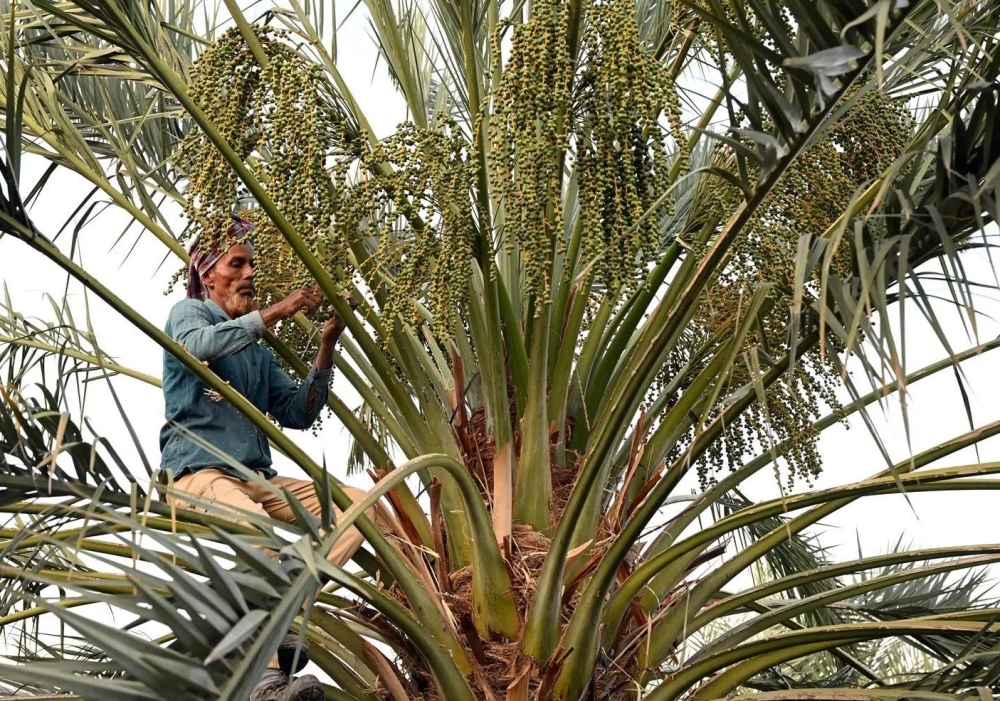
The regions of Hail, Al-Jawf, and Asir are home to more than 26,000 date palm farms, containing over 3.5 million productive palm trees that meet high standards.
The Hail region alone produces 20 varieties, most notably "Halwat Hail," "Al-Kasbah," and "Al-Rukhimi," while Asir farms offer 10 diverse varieties, including "Al-Safri," "Al-Barni," and "Al-Shukl."
The Al-Jawf region stands out on the date agricultural map for its unique varieties that have gained widespread renown, foremost among them being "Halwat Al-Jawf" and "Al-Husayniyah."