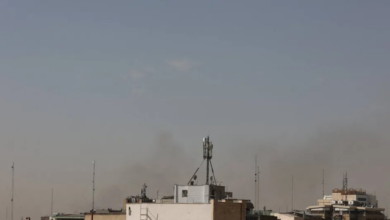
Incident assessment refutes targeting of Hodeidah residences: Evidence exonerates the coalition

The Joint Incidents Assessment Team issued a detailed statement refuting the allegations regarding the targeting by coalition forces of residential units belonging to employees of the electricity company in Al-Hali district of Hodeidah Governorate, Yemen, as part of its commitment to transparency and the application of international humanitarian law standards.
The context of the conflict and the importance of independent investigations
These investigations come at a time of ongoing tensions surrounding military operations in Yemen, where Hodeidah Governorate plays a strategic role as a vital artery and a theater for complex military operations. The Joint Incidents Assessment Team bears the significant responsibility of conducting independent investigations into all allegations of military errors or collateral damage, ensuring that military operations adhere to the rules of engagement and international law. This strengthens the credibility of the Arab Coalition's operations in support of legitimacy in Yemen before the international community.
Details of the claim and investigation procedures
The team spokesperson explained that the investigation was launched in response to a memorandum from the Office of the High Commissioner for Human Rights, which alleged that two airstrikes targeted residential units constructed of wood and zinc on Jizan Street in the early hours of March 26, 2022, resulting in the complete destruction of six units. Upon receiving the allegation, the team initiated its standard procedures, which included:
- Review air mission logs and daily inventory schedules.
- Analysis of satellite images before and after the date mentioned.
- Review post-mission reports and approved rules of engagement.
The reality on the ground: a legitimate military objective
A thorough investigation revealed that coalition forces did indeed conduct a military operation at the aforementioned time (3:00 AM), but the target was not civilian. Confirmed intelligence indicated that the Houthi militia had seized a specific site in the northern part of Hodeidah and converted it into a weapons manufacturing workshop with the presence of foreign experts. Based on Article 52 of Additional Protocol I to the Geneva Conventions, this site lost its protected status due to its use in the war effort, thus making it a legitimate military target that offered a tangible military advantage.
Space evidence refutes targeting civilians
A study of satellite images and a comparison of coordinates revealed compelling evidence exonerating the coalition from targeting civilian objects:
- Safe distance: The military target that was bombed is approximately 220 meters away from the residential location mentioned in the claim, a distance considered safe and outside the range of side effects of the guided bombs used.
- Safety of the alleged site: Satellite images subsequent to the aforementioned date showed that the buildings of the General Electricity Corporation (the alleged site) were still standing and had not been exposed to any effects of aerial bombardment, as were the buildings adjacent to them.
- Accuracy of execution: The coalition forces used two highly accurate guided bombs, and a late-night timing was chosen to ensure that there were no civilians in the vicinity of the military target.
Final result of the report
The Joint Incidents Assessment Team concluded that the procedures followed by the Coalition forces in dealing with the legitimate military target (the weapons manufacturing site) were sound and fully compliant with international humanitarian law and its customary rules. The report also categorically confirmed that the Coalition did not target the residential units of the electricity company's employees in Al-Hali district, thus refuting the allegations in their entirety.