
Record high gold prices globally
Global financial markets witnessed significant developments today, with gold prices surging and registering exceptional gains that caught the attention of investors. This rise was driven by a notable decline in the value of the US dollar, amid news and reports about a US plan aimed at ending the ongoing conflict in the Middle East. This geopolitical development significantly helped alleviate market concerns about the high inflation rates that have long burdened the global economy.
Details of gold and precious metal prices
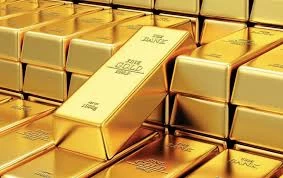
In more detail, gold futures (for April delivery) saw a significant increase of 3.65%, equivalent to $161.20, settling at $4,562.10 per ounce. The rise wasn't limited to futures contracts; the spot price of gold also climbed by 1.8% to reach $4,555.47 per ounce.
Among other precious metals, silver saw a strong positive performance, with the spot price rising by approximately 2.75% to settle at $73.18 per ounce. Silver futures (May delivery) also climbed by 4.75%, reaching $72.87 per ounce. Meanwhile, spot platinum prices increased by 1.3% to $1,954.52, while palladium was the only exception, experiencing a slight decline of 0.2% to settle at $1,437.80.
The dollar's decline and the historical context of safe havens
These moves come as the dollar index – which measures the performance of the US currency against a basket of six major currencies – fell 0.2% to 99.29. Historically, gold has been the primary safe haven for investors during times of crisis and economic volatility. The inverse relationship between the dollar and gold is a key market driver; a weaker dollar makes gold less expensive for buyers using other currencies, thus boosting demand. Furthermore, geopolitical tensions, particularly in vital regions like the Middle East, consistently drive capital towards safe-haven assets for hedging.
Economic impact locally, regionally, and internationally
As for the expected impact, these price increases are leaving their mark on several levels. Internationally, these surges are prompting central banks to reassess their strategic gold reserves. Regionally, any political stability resulting from diplomatic initiatives could alter the landscape of foreign investment in the region. Locally, this global rise is directly reflected in the gold market, where the cost of gold jewelry increases for consumers, leading a large segment of the population to turn to purchasing gold bars and coins as a hedge against inflation and a way to preserve savings.
In conclusion, the gold and precious metals markets remain highly sensitive to US economic data, especially that related to the Federal Reserve’s interest rate decisions, which will determine the future course of gold prices in the medium and long term.