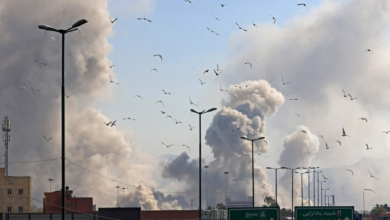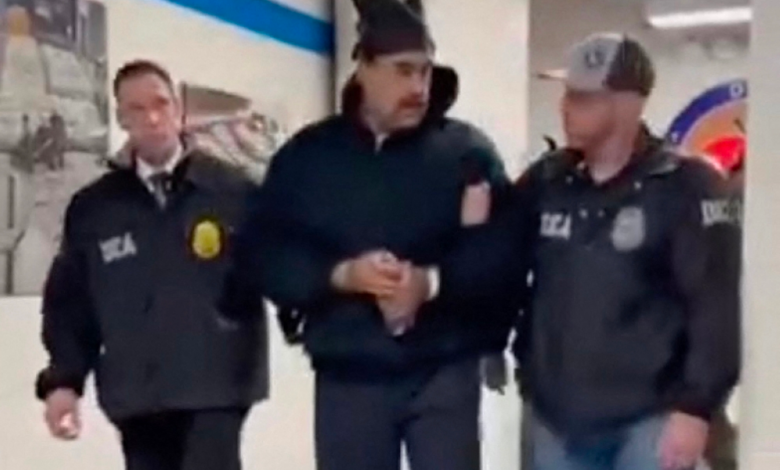

In a historic turning point for international relations and Latin America, Venezuelan President Nicolás Maduro before a federal judge in New York on Monday to formally face serious charges related to terrorism and drug trafficking. This appearance followed a major US military operation on Saturday that resulted in his arrest and transfer to the United States, amid widespread international anticipation of the trial and its potential repercussions.
Indictment: Drug terrorism and cocaine smuggling
The U.S. District Court for the Southern District of Manhattan announced that Maduro will be formally notified of the charges against him, which include “narco-terrorism” and conspiracy to smuggle large shipments of cocaine into the United States. These charges stem from a long-running U.S. investigation. In 2020, the U.S. Department of Justice filed similar charges against Maduro and several of his top aides, accusing them of turning Venezuela into a state sponsor of drug trafficking to finance illicit activities and destabilize the region.
Power shifts in Caracas: The army makes its position clear
In parallel with these dramatic developments in New York, the Venezuelan capital, Caracas, is witnessing rapid political activity. Venezuelan Defense Minister General Vladimir Padrino López announced in an official statement on Sunday that the military recognizes Vice President Delcy Rodríguez as the country's interim president. The minister explained that this measure is in accordance with a Supreme Court ruling that grants Rodríguez power for 90 days to ensure the continued functioning of state institutions.
While Padrino demanded Maduro’s immediate release, denouncing what he called the “cold-blooded murder of guards” during the arrest, the military’s swift recognition of the interim leadership indicates the military establishment’s desire to avoid a constitutional vacuum and maintain cohesion on the home front in the midst of this turbulent crisis.
Background to the conflict: Years of tension and sanctions
Today's events cannot be separated from the context of years of escalating tensions between Washington and Caracas. Since Maduro assumed power following the death of Hugo Chávez, bilateral relations have deteriorated sharply. The United States has imposed a series of harsh economic sanctions on Venezuela's oil sector and on prominent government figures, accusing the regime of corruption, human rights abuses, and election fraud, particularly after the 2018 election crisis and the earlier recognition of opposition leader Juan Guaidó as interim president.
Washington believes that the Maduro regime collaborated with armed groups, such as the Revolutionary Armed Forces of Colombia (FARC), to facilitate the passage of drugs, in what is known in US investigations as the “Cartel of the Suns,” allegedly run by senior officers in the Venezuelan army.
Expected repercussions: a geopolitical earthquake
The start of the trial of a head of state who still enjoys international recognition from major powers like Russia and China is expected to cause a geopolitical earthquake. Regionally, this event could trigger a new wave of instability in Latin America, with fears of new refugee flows should internal unrest erupt in Venezuela.
Internationally, attention will be focused on the reactions of Maduro's allies, as Havana, Moscow, and Beijing have already condemned US intervention. This event also has potential repercussions for global energy markets, given Venezuela's possession of the world's largest proven oil reserves, and the future of sanctions under the new interim leadership.