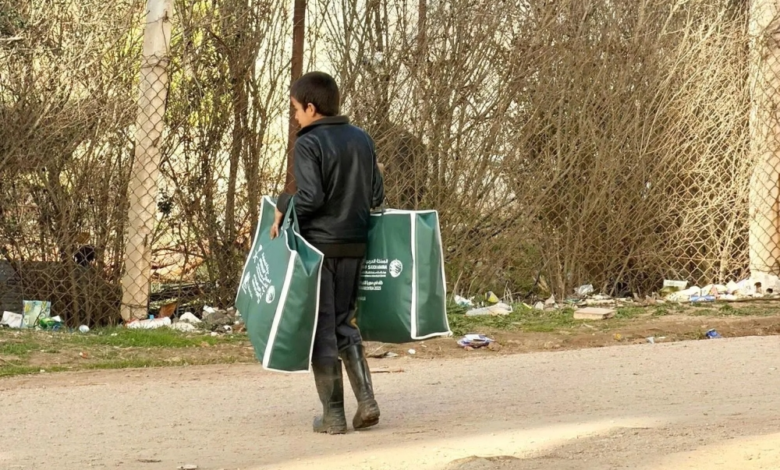

As part of the Kingdom of Saudi Arabia's ongoing humanitarian efforts to support affected populations worldwide, the King Salman Humanitarian Aid and Relief Center continued its relief programs in the Syrian Arab Republic. The Center announced the distribution of 584 vouchers for winter clothing, targeting several areas suffering from difficult living conditions, as part of the 2026 Winter Clothing Distribution Project (Kanaf).
The distribution operations covered diverse geographical areas to ensure aid reached those in need across various governorates. The Khirbet al-Jouz center in Idlib Governorate, the Busra al-Sham and al-Musayfirah centers in Daraa Governorate, and the Salma center in Latakia Governorate were targeted. These vouchers benefited 584 individuals from the most vulnerable families, enabling them to purchase essential winter clothing to protect themselves from the harsh weather.
The importance of the “Kanaf” project in facing the winter cold
The “Kanaf” project is one of the key initiatives launched by the King Salman Humanitarian Aid and Relief Center, primarily aimed at providing warmth to displaced and affected families as winter approaches. This assistance is of paramount importance given the sharp drop in temperatures across Syria, particularly in camps and rural areas, where many families lack heating and adequate clothing to withstand the bitter cold and frost.
The context of the humanitarian crisis and the growing need
This aid comes at a time of escalating humanitarian challenges in Syria, where millions are suffering from shortages of basic necessities and soaring fuel and heating prices. Winter clothing is a pressing need for children and the elderly, who are most vulnerable to cold-related illnesses. The voucher distribution mechanism is a positive step, giving beneficiaries the freedom to choose clothing and sizes that suit them, thus preserving their dignity and accurately meeting their actual needs.
The Kingdom's leading role in relief work
This initiative embodies the leading role of the Kingdom of Saudi Arabia, represented by its humanitarian arm, the King Salman Humanitarian Aid and Relief Center, in standing with the brotherly Syrian people. The Center's assistance is not limited to winter clothing alone, but extends to the sectors of food security, health, shelter, and education. These efforts underscore the Kingdom's unwavering commitment to humanitarian principles and its tireless pursuit of alleviating the suffering of those affected around the world, regardless of circumstances and logistical challenges.