
Trump's statements regarding the future of the Strait of Hormuz
US President Donald Trump made decisive statements regarding one of the world's most important waterways, asserting that the Strait of Hormuz would be reopened "soon," regardless of whether Iran cooperates. These statements come at a sensitive time, preceding anticipated peace talks in Pakistan, where maritime security in this vital waterway is expected to be a key item on the agenda.
Historical context and strategic importance
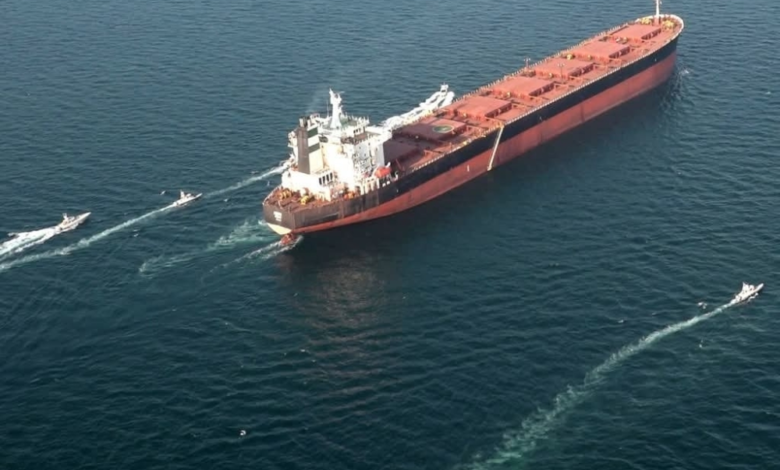
The Strait of Hormuz, which connects the Persian Gulf, the Gulf of Oman, and the Arabian Sea, is one of the world's most important strategic and economic waterways. Its importance dates back decades, reaching its peak during the Tanker War of the 1980s, and since then the international community has paid close attention to ensuring the safety of commercial vessels. The strait has witnessed numerous tensions, as Tehran has consistently used it as a tool for political and military leverage in the face of international sanctions and tensions with the United States and its allies. A significant portion of the world's oil supply, estimated at about one-fifth of global crude oil consumption, passes through this narrow strait, making it a critical chokepoint for global energy security.
Details of the American position
In his remarks, Trump spoke to reporters before departing Washington, D.C., for a domestic trip, emphasizing his administration's firm stance on maritime security. He stated unequivocally, "We will open the Gulf with or without them... or the Strait, as they call it. I think it will be fairly quick, and if it doesn't happen, we will be able to finish it." These words reflect a strategy of maximum pressure and a readiness to intervene to ensure the unimpeded flow of global trade.
Expected impact regionally and internationally
These statements are of paramount importance and are expected to have repercussions on several levels. Regionally, freedom of navigation in the Strait of Hormuz is a vital lifeline for the Gulf Arab states, which rely heavily on oil and gas exports to global markets. Any threat to close the strait would have serious economic and security consequences for the Middle East.
On the international level, the stability of the Strait of Hormuz is inextricably linked to global energy prices. Any escalation or actual closure would trigger a shock to oil markets, impacting major economies in Asia, Europe, and the Americas. The United States, through its military presence in the region represented by the Fifth Fleet, has consistently affirmed its commitment to protecting freedom of navigation in international waterways. Trump's statements reaffirm that Washington considers the security of the Strait of Hormuz a red line that cannot be crossed, and that all options remain open to ensure this vital waterway remains open for global trade. This places a responsibility on the international community to guarantee the region's stability and prevent any potential military escalation.