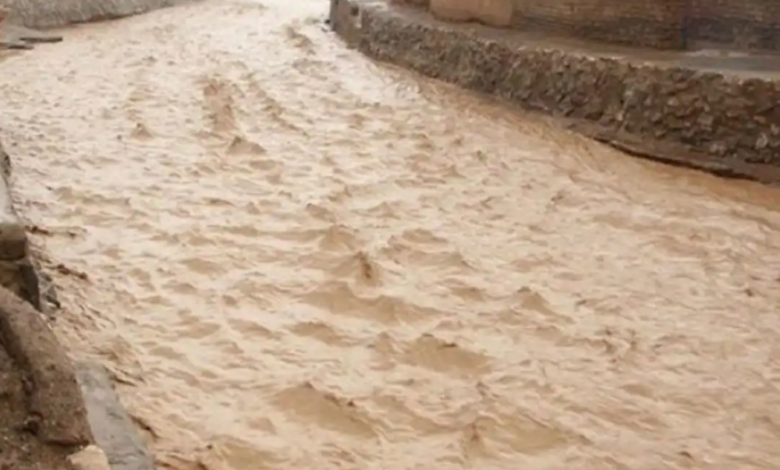

At least 17 people were killed and 11 others were seriously injured in a violent wave of floods and torrents that swept through large areas of Afghanistan, as a result of unprecedented heavy rainfall during the current season.
Details of the natural disaster
The spokesperson for the Afghan National Disaster Management Authority, Mohammad Yusuf Hamad, announced in an official statement today that the country has experienced its first heavy rainfall and snowfall of the season. While these rains were intended to end a long and severe drought, they quickly turned into a curse, causing devastating floods that have affected numerous provinces and districts.
The Afghan official explained that the severe weather not only claimed lives but also paralyzed daily life across the central, northern, southern, and western regions of the country. He noted that the floods severely damaged already dilapidated infrastructure and led to the deaths of large numbers of livestock, a primary source of livelihood for rural populations.
Extent of damage and emergency response
According to preliminary data, approximately 1,800 families were directly affected by the disaster, exacerbating the already precarious living conditions in rural and urban areas suffering from economic and service insecurity. Mohammed Yusuf confirmed that the National Disaster Management Authority has mobilized its teams and dispatched emergency assessment teams to the most affected areas, where they are currently conducting thorough field surveys to determine the additional needs of those affected and coordinate relief efforts.
The geographical and climatic context of Afghanistan
These floods occur within a complex geographical and climatic context; Afghanistan, like its neighbors India and Pakistan, is highly vulnerable to extreme weather events. The country's rugged, mountainous terrain makes it susceptible to flash floods during heavy rainfall, especially after periods of drought that harden the soil and impair its ability to absorb water quickly.
Infrastructure challenges and the humanitarian crisis
The fragility of Afghanistan's infrastructure exacerbates the tragedy, as a large portion of the population lives in traditional mud-brick houses in villages and rural areas—buildings that typically cannot withstand the force of floodwaters, thus increasing the likelihood of human and material losses. Afghanistan faces compounded challenges; in addition to natural disasters, the country is grappling with severe economic and humanitarian crises, making it extremely difficult for local communities to recover from the effects of floods without external intervention and support.
Climate experts warn that global climate change is increasing the frequency and intensity of these phenomena in South and Central Asia, where severe droughts alternate with devastating floods, threatening food security and the livelihoods of millions of people in these regions.