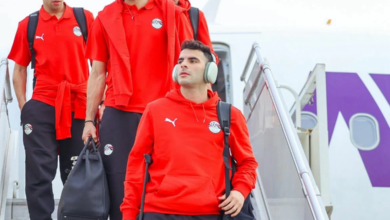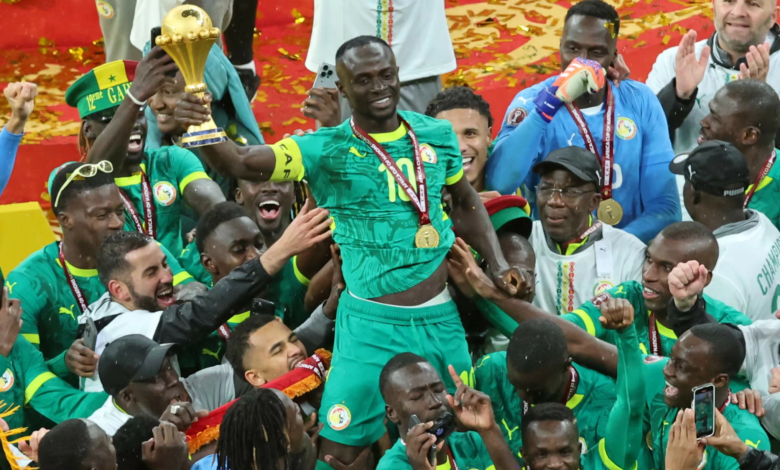
Africa Cup of Nations title crisis: Arbitration Court suspends Morocco's crowning

The Africa Cup of Nations title crisis escalates before the Court of Arbitration for Sport
International media reports indicate rapid developments in the legal dispute surrounding the 2025 Africa Cup of Nations title, with the Court of Arbitration for Sport (CAS), based in Lausanne, Switzerland, becoming the central venue for this unprecedented crisis in the history of African football. The Senegalese Football Federation filed a formal complaint against the Confederation of African Football's (CAF) decision to strip Senegal of the title and award it to Morocco. Adding to the uncertainty, legal sources indicate that the court has taken a precautionary measure, suspending the implementation of CAF's Appeals Committee's decision, thus placing the continental title in a state of "legal suspension" until a final ruling is issued.
Historical context and importance of the continental championship
The Africa Cup of Nations is the most important and largest sporting event on the African continent, attracting global public and media attention. This crisis takes on added dimensions given the stature of the two teams; Senegal are the 2021 champions and boast world-class stars, while Morocco has a rich footballing history and a high international ranking, especially after their historic achievement of reaching the semi-finals of the 2022 World Cup. This clash between two African giants makes the current dispute a matter of public opinion in the sporting world that transcends the borders of the two countries, encompassing the entire continent and placing CAF's regulations under international scrutiny.
Details of the crisis and CAF's controversial decisions
The roots of this complex crisis lie in the final match held in the Moroccan capital, Rabat, on January 18th. The match witnessed dramatic events when the Senegalese national team players temporarily walked off the pitch in protest against two consecutive refereeing decisions: the first, the cancellation of a goal scored by Senegal, and the second, the awarding of a penalty kick to the Moroccan team. Although Sadio Mane and his teammates returned to complete the match and secured a 1-0 victory in extra time, the CAF Appeals Committee later decided to overturn this result. The committee declared Morocco the winner with a score of 3-0, basing its decision on the Senegalese players' protest behavior during the match.
South Africa intervenes and internationalizes the issue
In a remarkable regional development reflecting the extent of solidarity and alliances within the continent, Senegal has received unprecedented political and legal support from South Africa, a country that has long played an influential role in African sports politics. South African Minister of Sport, Arts and Culture, Jeton McKenzie, announced his country's readiness to provide comprehensive legal support to Senegal before the Court of Arbitration for Sport. McKenzie stated unequivocally, "Senegal is the champion of Africa, because football matches are not won in boardrooms." He affirmed that his country would provide a select group of top lawyers to ensure the protection of the Senegalese national team's legal rights, signaling that the case could escalate into a continent-wide sporting and legal power struggle.
Expected repercussions and the future of sports justice
To date, the Court of Arbitration for Sport (CAS) has not issued any official statement confirming the acceptance of the complaint or providing details regarding the suspension of CAF's decision. This leaves the case open to all possibilities amidst widespread public and legal anticipation. It is expected that the court may take between six and nine months to issue its final ruling, after hearing arguments from all parties involved. This dispute puts the credibility and governance of the Confederation of African Football (CAF) to the test and represents a true test of the independence of sports judicial institutions and their ability to uphold the principles of justice and transparency, free from any other considerations.