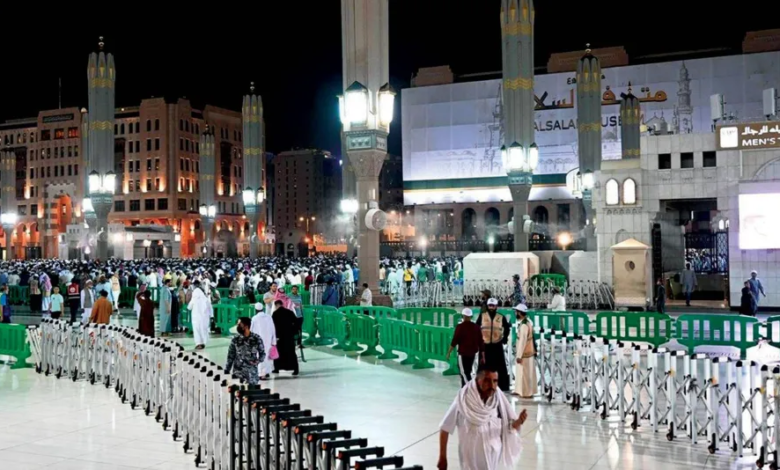
With the arrival of the holy month of Ramadan, the Two Holy Mosques are witnessing an unprecedented transformation in the level of services provided to pilgrims and worshippers, thanks to the significant expansion in the use of artificial intelligence and smart digital solutions. This step comes in response to the expected millions of visitors and in an effort to provide a safe and accessible spiritual environment, where technology is no longer merely a supplementary tool, but has become the backbone of managing the Hajj and Umrah system.
General context: Digital transformation and Vision 2030
This technological advancement cannot be separated from the broader context of the Kingdom's Vision 2030 , which prioritizes serving pilgrims. In the past, crowd management relied heavily on direct human effort, posing a significant challenge during peak times. Today, the strategy has shifted towards a "smart Haram," where big data and artificial intelligence are employed to predict and distribute crowds in a balanced manner, reflecting the Kingdom's commitment to harnessing cutting-edge technology to serve Islam and Muslims.
Artificial intelligence applications in the field
Modern technology is evident in many ways within the halls of the Grand Mosque in Mecca and the Prophet's Mosque in Medina, perhaps the most prominent of which are:
- Smart robots: A fleet of specialized robots powered by artificial intelligence has been deployed, including 24/7 sterilization robots to ensure a healthy environment, Zamzam water distribution robots, and guidance robots that provide fatwa and instant translation services in more than 11 international languages to communicate with visitors of different nationalities.
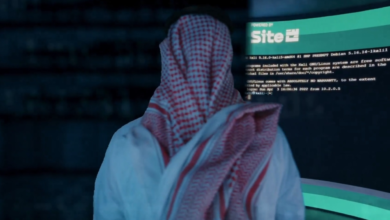
- Smart crowd management: Authorities rely on a vast network of thermal cameras and sensors linked to central control rooms. Artificial intelligence algorithms analyze pedestrian movement in real time, sending proactive alerts when any potential bottlenecks are detected, thus facilitating the flow of pilgrims and ensuring the smooth performance of Tawaf and Sa'i.
- The "Nusk" application and digital platforms: The software aspect represents a fundamental pillar, as smart applications allow pilgrims to book permits and choose the least crowded times based on accurate data indicators.
Importance and expected impact
This approach is of paramount importance on several levels. Locally , it enhances operational efficiency and reduces waste in human and material resources. Regionally and internationally , the Kingdom is presenting a pioneering model in "smart religious tourism," solidifying its position as a global leader in managing millions of pilgrims. Integrating artificial intelligence into the Umrah rituals is not merely about organization; its primary aim is to free up pilgrims for worship. The intelligent system handles the logistical details, allowing visitors to focus on the spiritual aspect, making this year's Ramadan Umrah experience smoother and more spiritually enriching than ever before.