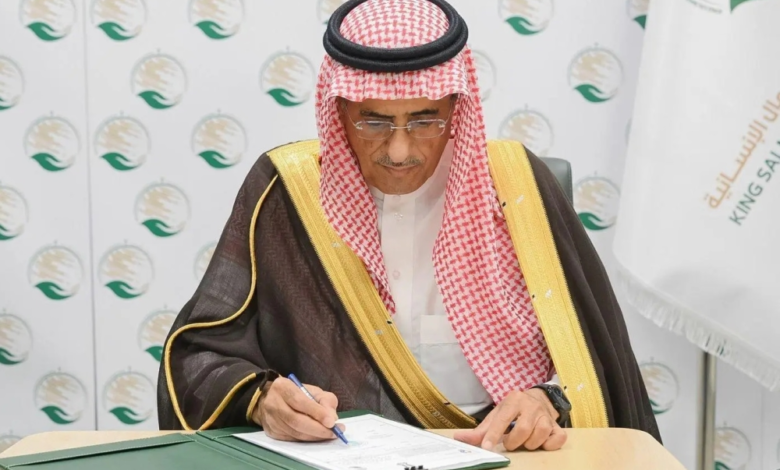
King Salman Relief Center launches field schools to support the education of Gaza's children

A pioneering Saudi initiative to support education in Gaza
In a significant humanitarian step aimed at safeguarding the future of Gaza's children, the King Salman Humanitarian Aid and Relief Center signed a joint executive program with the Saudi Center for Culture and Heritage via video conference. This ambitious program aims to establish and operate safe learning spaces, known as "field schools," and provide psychosocial support to Palestinian children whose education has been disrupted by the current situation in the Gaza Strip. The project is expected to benefit 1,000 students in its first phase.
Education in the face of the humanitarian crisis in Gaza
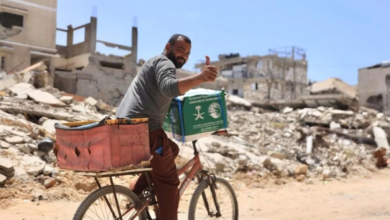
This project comes at a time of catastrophic humanitarian and educational conditions in the Gaza Strip. The recent crisis has led to widespread destruction of infrastructure, including educational institutions. International organizations report that most of the Strip's schools have been severely damaged or completely destroyed, while the few remaining schools have been converted into shelters for displaced people. This tragic reality has deprived hundreds of thousands of children of their fundamental right to education and subjected them to profound psychological trauma, threatening to create a lost generation if the situation is not addressed.
Project dimensions: Integrated education and psychological support
The program goes beyond simply providing temporary classrooms; it aims to create a safe and stimulating learning environment that helps children regain a sense of normalcy. Psychosocial support is a cornerstone of the project, with specialized programs designed to help students cope with their trauma and build resilience. This holistic approach represents an investment in children's mental and emotional well-being as much as it is an investment in their academic future.
Continuing the Kingdom's humanitarian role
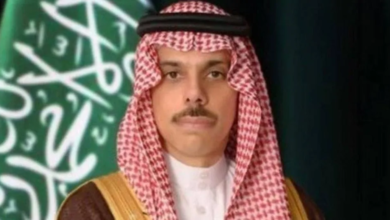
This program is an extension of the ongoing humanitarian efforts provided by the Kingdom of Saudi Arabia, through its humanitarian arm, the King Salman Humanitarian Aid and Relief Center, to the Palestinian people. This initiative underscores the Kingdom's leading role in responding to humanitarian crises worldwide, focusing on vital sectors such as health, food, shelter, and now education, which is considered the cornerstone of building any society. The agreement was signed by the Assistant Supervisor General of the Center for Operations and Programs, Engineer Ahmed bin Ali Al-Baiz, and the Chairman of the Board of Directors of the Saudi Center for Culture and Heritage, Dr. Essam Fathi Abu Khalil, reflecting the integration among Saudi institutions in serving humanitarian causes.
Expected impact: A glimmer of hope for a better future
The field schools project has a profound impact that extends far beyond the classroom walls. Locally, it offers a glimmer of hope to 1,000 children and their families, contributing to the continuity of their education. Regionally and internationally, it underscores the Kingdom of Saudi Arabia's commitment to supporting just humanitarian causes and provides a practical model for the importance of protecting education in conflict zones, recognizing it as a fundamental right for children and an urgent necessity for ensuring a stable and prosperous future.