Al-Alimi: Protecting civilians and rejecting the militarization of politics is a top priority

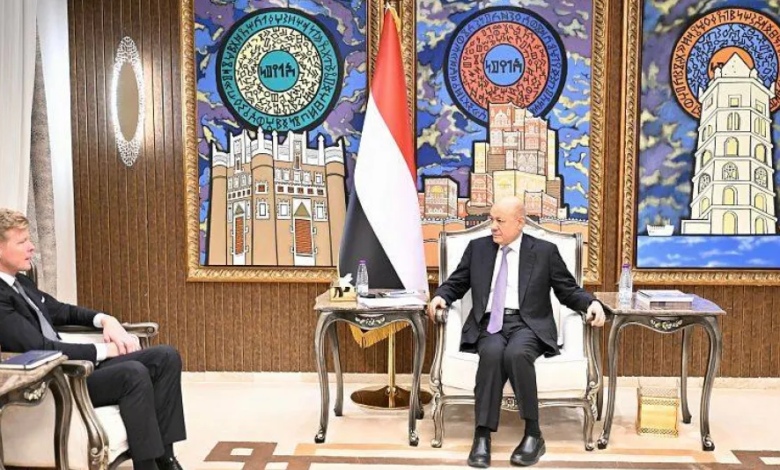
Dr. Rashad Muhammad Al-Alimi, Chairman of the Presidential Leadership Council in Yemen, stressed the need to give the protection of civilians the highest priority in all political and field movements, stressing that the restoration of the state can only be achieved by rejecting violence and deterring all forms of militarization of political life imposed by the militias on the Yemeni scene.
Priority of protecting civilians in conflict
Al-Alimi emphasized that the humanitarian suffering endured by the Yemeni people necessitates concerted local and international efforts to ensure the protection of civilians from conflict zones. This emphasis comes at a time when UN reports indicate that the humanitarian crisis in Yemen remains the worst in the world, with millions of Yemenis in urgent need of assistance. Observers believe that the Presidential Leadership Council Chairman's focus on this issue reflects the legitimate government's commitment to its moral and legal responsibilities towards citizens in all governorates, including those under militia control.
Rejection of the militarization of political life
Regarding the political aspect, Al-Alimi explained that the militarization of political life represents the greatest obstacle to achieving sustainable peace. This concept refers to the dominance of armed force over political decision-making, an approach adopted by the Houthi group since its coup against the state in 2014. The legitimate Yemeni government consistently calls for the state and its official military and security institutions to have a monopoly on the use of force, considering this a fundamental condition for building a modern, civil state that respects the constitution and the rule of law.
The historical and political context of the crisis
These statements come at a critical juncture for Yemen since the formation of the Presidential Leadership Council in April 2022, which aimed to unify ranks to confront political, military, and economic challenges. The Council inherited a heavy legacy of conflict that has devastated infrastructure and torn apart the social fabric. Al-Alimi's calls are an extension of the three agreed-upon frameworks (the Gulf Cooperation Council Initiative, the outcomes of the National Dialogue Conference, and UN Security Council Resolution 2216), all of which emphasize the necessity of ending the coup and restoring state institutions.
Regional and international dimensions
At both the regional and international levels, these statements are of paramount importance, coinciding with the efforts of the UN envoy to Yemen and regional mediators, particularly Saudi Arabia and Oman, to solidify the ceasefire and advance a comprehensive political solution. The international community recognizes that the continued militarization of the Yemeni conflict not only threatens Yemen's stability but also jeopardizes international maritime security in the Red Sea and the Bab al-Mandab Strait, making support for the legitimate Yemeni government in its efforts to establish security and protect civilians a shared international interest.