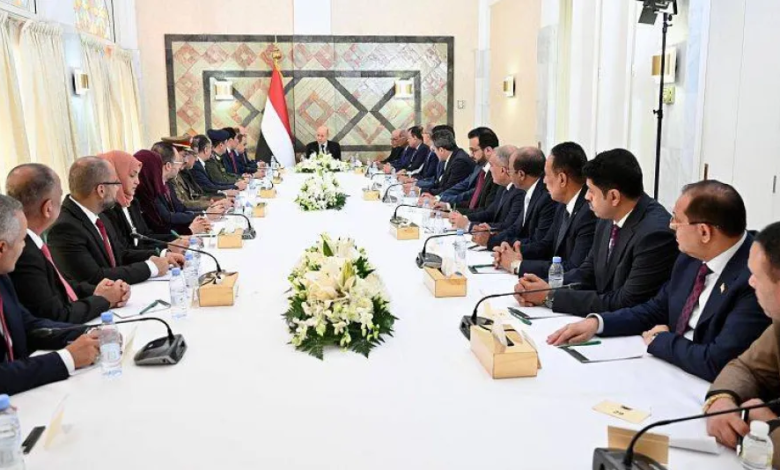

وجه رئيس مجلس القيادة الرئاسي في اليمن، الدكتور رشاد محمد العليمي، حزمة من التوجيهات الصارمة والمحددات الرئيسية التي ترسم ملامح العمل الدبلوماسي اليمني للمرحلة المقبلة، وذلك خلال لقائه بوزير الخارجية وشؤون المغتربين الدكتور شائع محسن الزنداني. ويأتي هذا اللقاء في توقيت بالغ الحساسية يتطلب تفعيل دور الدبلوماسية اليمنية لمواجهة التحديات الراهنة، حيث شدد العليمي على ضرورة الالتزام باللوائح والقوانين النافذة وتصحيح الاختلالات الإدارية التي شابت العمل خلال الفترات الماضية.
وتضمنت خارطة الطريق التي وضعها العليمي أمام الوزير الزنداني التركيز على أولويات السياسة الخارجية للدولة، وفي مقدمتها حشد الدعم الإقليمي والدولي لمجلس القيادة الرئاسي والحكومة الشرعية في سعيها لاستعادة مؤسسات الدولة وإنهاء الانقلاب الحوثي. وأكد العليمي أن المرحلة لا تحتمل الفشل أو التراخي، محذراً من استمرار أي ممارسات تعيق الأداء المؤسسي، ومشدداً على أهمية اعتماد معايير الكفاءة والمهنية في التعيينات والترقيات الدبلوماسية، بعيداً عن المحسوبية التي أثقلت كاهل الوزارة سابقاً.
سياق التغيير وأهمية المرحلة
يأتي تعيين الدكتور شائع الزنداني وزيراً للخارجية خلفاً للدكتور أحمد عوض بن مبارك (الذي تولى رئاسة الوزراء) كخطوة استراتيجية تهدف إلى ضخ دماء جديدة في شريان الدبلوماسية اليمنية. ويتمتع الزنداني بخبرة دبلوماسية عريقة تمتد لعقود، وهو ما يعول عليه مجلس القيادة الرئاسي لإحداث نقلة نوعية في الأداء الخارجي. وتكتسب هذه التحركات أهميتها من السياق التاريخي والسياسي الراهن، حيث تخوض الحكومة اليمنية معركة سياسية واقتصادية شرسة بالتوازي مع المعركة العسكرية، مما يجعل من السفارات والبعثات الدبلوماسية خط الدفاع الأول في المحافل الدولية لفضح انتهاكات الميليشيات وتوضيح الصورة الحقيقية للأزمة اليمنية.
التحديات الاقتصادية والسياسية
من الناحية الاقتصادية، ركزت توجيهات العليمي على ضرورة ترشيد النفقات في البعثات الخارجية، بما يتوافق مع ظروف الأزمة المالية الخانقة التي تمر بها البلاد نتيجة توقف تصدير النفط بسبب الهجمات الحوثية. وتعد إعادة هيكلة السلك الدبلوماسي وتقليص النفقات غير الضرورية جزءاً لا يتجزأ من خطة الإصلاح الاقتصادي الشاملة التي تتبناها الدولة. وعلى الصعيد السياسي، تهدف هذه الخارطة إلى توحيد الخطاب السياسي اليمني في الخارج، وضمان تنسيق المواقف مع دول تحالف دعم الشرعية والمجتمع الدولي، لاسيما في ظل التوترات المتصاعدة في البحر الأحمر وتأثيرها على مساعي السلام.
وفي ختام توجيهاته، اعتبر العليمي أن نجاح الوزير الزنداني في مهامه يمثل ركيزة أساسية لنجاح الحكومة ككل، مشيراً إلى أن الدبلوماسية النشطة والفعالة هي القادرة على جلب الدعم التنموي والإنساني للشعب اليمني، وتعرية المشاريع التخريبية التي تستهدف أمن واستقرار المنطقة. ويترقب الشارع اليمني نتائج هذه التوجيهات الرئاسية، آملاً أن تنعكس إيجاباً على أوضاع المغتربين اليمنيين وتحسين الخدمات القنصلية المقدمة لهم في مختلف دول العالم.