Al-Alimi criticizes Emirati support for the Southern Transitional Council: Details of the crisis

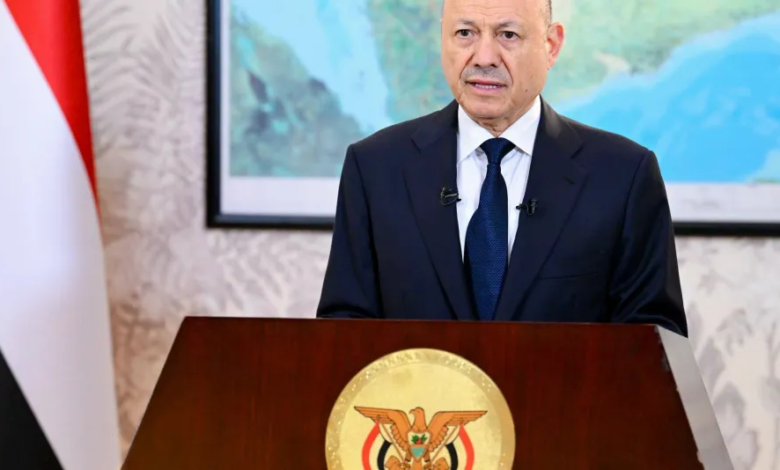
In a notable development in the political and military landscape in Yemen, strong indications of a rift within the Presidential Leadership Council have recently emerged, centered around statements and positions attributed to the Council’s president, Dr. Rashad Al-Alimi, concerning the nature of the role played by the United Arab Emirates in the southern governorates, specifically regarding its support for the Southern Transitional Council’s movements.
Context of the crisis and background to the formation of the Presidential Council
To understand the depth of this crisis, one must go back to April 2022, when the Presidential Leadership Council was formed in the Saudi capital, Riyadh, with the aim of unifying the anti-Houthi front. The council comprised a heterogeneous mix of political and military forces, most notably the Southern Transitional Council, which advocates for the restoration of the former South Yemen state, and the government forces committed to Yemeni unity. Despite the hopes pinned on this formation to end the internal conflict, the divergent agendas and regional backers remained a ticking time bomb, threatening to ignite the situation at any moment.
The UAE's role and the roots of the dispute
Reports and political stances indicate that the core of the dispute lies in the ongoing military and logistical support provided by Abu Dhabi to military formations affiliated with the Southern Transitional Council, such as the Security Belt Forces and the Elite Forces, which often operate independently of the Yemeni Ministry of Defense. Observers believe that the characterization of these actions as a "rebellion" by some within the legitimate government reflects genuine concerns about the erosion of central state authority and the transformation of liberated governorates into cantons under the influence of de facto powers backed by external forces, thus weakening al-Alimi's position as president of the country.
Local and regional repercussions
The effects of this tension are not limited to the political aspect alone, but extend to include serious repercussions on several levels:
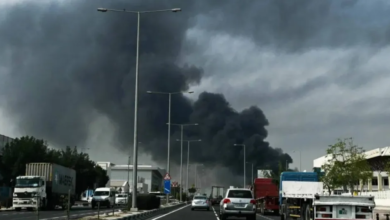
- On the local level: The continuation of this tension and conflict is leading to a deterioration in the security situation in the interim capital, Aden, and the neighboring governorates, which is negatively impacting basic services and exacerbating the economic suffering of citizens in light of the collapse of the local currency.
- On the military front: The fragmentation of efforts between government forces and the Transitional Council forces weakens the unified front against the Houthis, which may give the group an opportunity to make gains on the ground or harden its stance in peace negotiations.
- On the regional level: This issue puts the Arab coalition to a real test of the extent of agreement between its two poles (Saudi Arabia and the UAE) regarding the final vision for the future of Yemen, between preserving its unity or supporting federalism and secession projects.
In conclusion, the Yemeni scene remains open to all possibilities, as containing this tension requires intensive diplomatic efforts to reformulate the relationship between the components of legitimacy and its supporters, to ensure that the liberated areas do not slide into new rounds of violence that could be very costly for everyone.