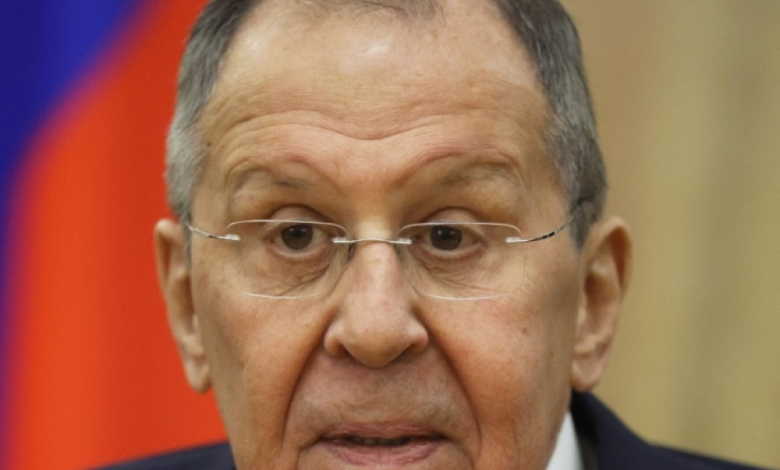

Russian Foreign Minister Sergey Lavrov issued a stern warning to Western countries and NATO, asserting that Moscow would not stand idly by in the face of any attempts to transform Greenland into a military platform that threatens Russian national security. Lavrov's remarks came during a speech before the Russian State Duma, where he emphasized that his country is prepared to take comprehensive countermeasures, including military and technical measures, should it detect any moves to bolster the Western military presence on the Arctic island.
Context of escalation in the Arctic
These statements come at a time of increasing geopolitical competition in the Arctic. Russia views the region as a vital strategic area for its security and economy, particularly given its extensive Arctic coastline and control of the Northern Sea Route. Conversely, the United States and its NATO allies are seeking to bolster their presence in the region to counterbalance growing Russian and Chinese influence. Greenland, a self-governing territory of Denmark, is a pivotal point in this equation, especially with the presence of the strategic US air base at Thule.
The strategic importance of Greenland
Greenland's importance lies not only in its geographical location midway between North America, Europe, and Russia, but also in the vast natural resources that are becoming apparent as the ice melts, as well as its role in surveillance and early warning. The Kremlin fears that the island could be used to deploy missile systems or advanced radars that could diminish Russia's nuclear deterrent capabilities or threaten its bases on the Kola Peninsula.
Potential repercussions and future scenarios
Lavrov's invocation of "military and technical measures" recalls the terminology Moscow used before major escalations of tensions with the West on other issues. Observers believe that the militarization of Greenland could trigger a new arms race in the Arctic, a region long considered a "low-tension" zone. Russian responses might include bolstering its military presence on its northern islands, deploying hypersonic missiles, or intensifying naval and air patrols near the maritime borders of Scandinavian countries, thus increasing the risk of direct confrontation between the great powers in the far north.