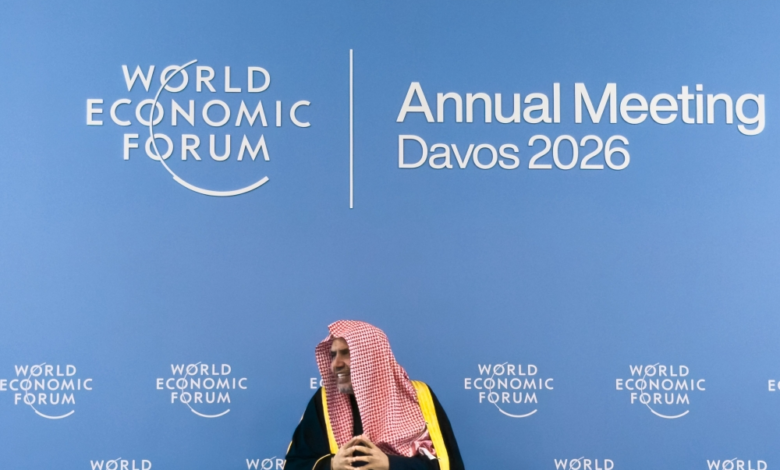

In a move reflecting the influential presence of major Islamic institutions on the international stage, the 2026 World Economic Forum in Davos selected His Excellency the Secretary General of the Muslim World League and Chairman of the Council of Muslim Scholars, Sheikh Dr. Mohammed bin Abdulkarim Al-Issa, to deliver the closing address for the religious and intellectual engagement. This selection is a culmination of the League's ongoing efforts to promote the concepts of peace and peaceful coexistence globally.
Global initiatives to correct misconceptions
In his keynote address, Dr. Al-Issa focused on reviewing a range of impactful initiatives and programs spearheaded by the Muslim World League, which have become global models to be emulated. Among the most prominent of these initiatives is the “Building Bridges of Understanding and Cooperation between East and West” initiative, hosted by the United Nations headquarters in New York and receiving broad international support. This initiative marked a turning point in religious and intellectual discourse, offering practical implementation programs to dismantle theories of “inevitable clash” and “civilizational conflict,” thereby addressing the intellectual roots that fuel hatred and extremism.
The Islamic vision: justice and mercy
In discussing the ethical essence of Islam, Al-Issa emphasized that Islam, while a monotheistic faith, is also a comprehensive legal and ethical system that honors humanity and holds individuals accountable for their choices. He pointed out that justice in the Islamic perspective is an absolute value for ensuring societal stability, free from any racial or religious discrimination. He further explained that "mercy" is not merely a slogan, but a central value governing interactions with others, affirming that peace and coexistence are the norm in human relations, and that conflict is the exception that must be addressed.
The Makkah Document: A Shared Human Charter
The Secretary-General addressed the strategic importance of the “Makkah Document,” a historically unprecedented document in contemporary Islamic history. This document was endorsed by more than 1,200 muftis and scholars from various Islamic schools of thought and sects under the auspices of the Holy Kaaba, and subsequently adopted by the member states of the Organization of Islamic Cooperation. The significance of this document lies in the fact that:
- She emphasized that Muslims are an active partner in contemporary human civilization.
- It established the principle that religious and cultural differences are a universal law that necessitates getting to know one another, not fighting.
- It criminalized linking religions to crimes committed by some who falsely claim to belong to them.
- It established practical frameworks for pressing issues such as women’s rights, the environment, and inclusive citizenship.
An impact that transcends boundaries
Al-Issa pointed out that the League did not merely issue documents, but also worked to transform the texts of the “Makkah Document” and the “Document on Building Bridges Between Islamic Schools of Thought” into training programs to qualify imams and preachers worldwide, thus contributing to strengthening intellectual security and combating extremism. He concluded his remarks with an open invitation for global solidarity among peace-loving institutions to promote friendship between nations through sustainable and measurable programs that ensure a more secure and prosperous future for generations to come.