The Eternal Club Project: The story of Ben Harburg's investment and the challenge of the giants

Introduction: An administrative and investment revolution at Al-Kholoud Club
The story of Al-Kholoud FC in Saudi Arabia wasn't just a typical rise in performance on the pitch; it transformed into a unique administrative and investment model within the Saudi sports landscape. This true revolution began with the arrival of American investor Ben Harburg, who didn't come as a traditional owner seeking sporting prestige, but rather with a comprehensive project embodying a clear and entirely different philosophy, even though it wasn't without controversy and faced significant challenges in a fiercely competitive environment.
General context: The privatization project and the Kingdom's Vision 2030
To understand the significance of what's happening at Al-Kholoud Club, one must consider the broader context of Saudi sports. This acquisition falls under the umbrella of the sports club investment and privatization project launched by His Royal Highness the Crown Prince as part of the Saudi Vision 2030 objectives. This ambitious national project aims to build a dynamic sports sector and incentivize private sector investment in sports. While the Public Investment Fund (PIF) has acquired the four major clubs in massive deals to attract top international stars, Al-Kholoud's trajectory represents the other side of the privatization plan: attracting foreign direct investment to clubs and developing them from the ground up.
A historic acquisition and the philosophy of Brighton Saudi
Since its acquisition in July 2025, Al-Kholoud FC has made history, becoming the first Saudi club fully owned by a foreign investor. This landmark move has placed the club under intense scrutiny from the sports community and analysts alike. Ben Harburg made no secret of his ambition, openly declaring his desire to transform Al-Kholoud into a Saudi version of English club Brighton & Hove Albion. This philosophy relies on building a robust scouting network and nurturing young talent rather than spending exorbitant sums on established stars. This investment approach has clashed with the reality of a league that pours massive amounts of money into international transfers, making Al-Kholoud's mission seem like swimming against the tide.
Challenges of the beginning and the realism of the discourse
As is to be expected with any transformative project, challenges arose early on. The club underwent extensive administrative and technical changes, including the dismissal of coaches and a near-complete rebuild of the first team. The management went through a transitional phase that was described in sporting circles as uncertain. Nevertheless, Harburg remained committed to his long-term vision, which focused on establishing a state-of-the-art academy and modernizing the infrastructure, with the goal of transforming the club into a true talent factory within a decade.
In his public statements, Harburg was far from conventional diplomacy. He criticized the league's inflated spending, deeming it financially unsustainable in the long run. He also stirred controversy by openly admitting his fear of relegation at a crucial stage of the season. This pragmatic approach, blending investment ambition with sporting anxiety, painted a picture of an owner deeply involved in his club's affairs, rather than simply observing from afar.
Local impact and reaching the King's Cup final
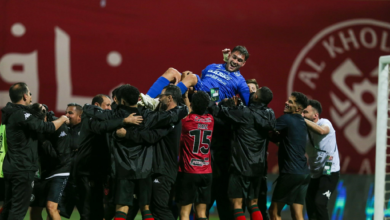
Harburg's influence wasn't limited to the administrative side; it extended to the emotional realm as well. His interaction with the team was unconventional; his enthusiastic celebrations among the fans in the stands after victories embodied a rare emotional bond between a foreign owner and a local club, further boosting the project's popularity. Amidst all these challenges, Al-Kholoud continued its steady and surprising progress. The success of this project culminated in the team reaching the King's Cup final after eliminating the star-studded Al-Ittihad, setting up a historic clash with Al-Hilal in a test that represents the pinnacle of footballing dreams.
Conclusion: Will philosophy triumph over money?
Today, the story of Al-Kholoud Club is no longer just a fleeting adventure, but a comprehensive sports project under immense pressure to prove itself. The question now is: will the philosophy of sustainability and talent development prevail over the reality of massive spending, or will the beautiful dream stop at the limits of audacity and trial?