Russia warns the US against resuming nuclear tests: a dangerous domino effect

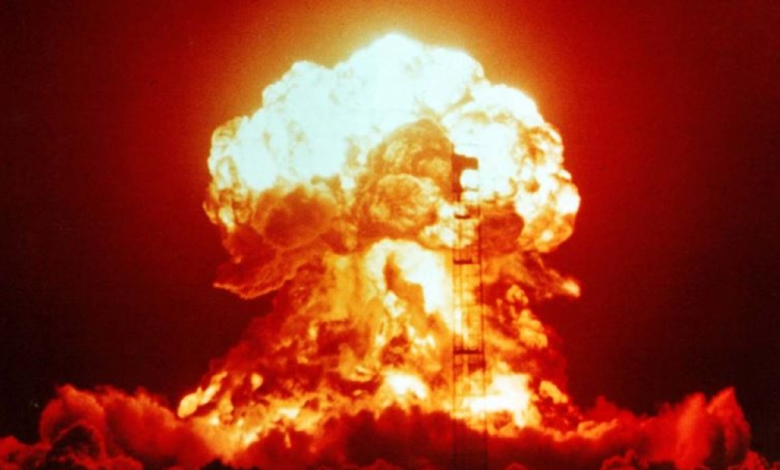
Russia issued a strongly worded warning to the United States on Tuesday against resuming nuclear testing, asserting that such a move would lead to unpredictable consequences on the international stage and could trigger what it described as a "domino effect" that threatens global security stability.
Russian warnings in Geneva
This warning came from Russian Ambassador Gennady Gatilov during his address to the Conference on Disarmament in Geneva. Gatilov referred to recent statements by US officials hinting at the possibility of Washington resuming nuclear testing, a move that was seriously considered during the administration of former President Donald Trump.
Gatilov stated clearly: "We warn that a US reversal of its moratorium on nuclear testing will trigger a domino effect," emphasizing that Washington will bear full responsibility for the negative repercussions that will affect the international security system and arms control treaties.
Context of mutual accusations
Russia's firm stance comes in response to statements made a week earlier by Christopher Ford, the US Assistant Secretary of State for Arms Control and Nonproliferation, who affirmed his country's readiness to conduct low-yield nuclear tests if necessary. Washington went further, directly accusing both Beijing and Moscow of conducting clandestine nuclear tests in violation of international standards.
Historical background: The collapse of the arms control system
To understand the seriousness of this escalation, one must consider the historical context. The superpowers (the United States and Russia) have adhered to a voluntary moratorium on nuclear testing since 1992, following the end of the Cold War. The Comprehensive Nuclear-Test-Ban Treaty (CTBT), adopted in 1996, is the cornerstone of this commitment, although the United States signed it but has not yet ratified it.
Observers believe that the threat of resuming nuclear testing represents a devastating blow to what remains of the global arms control framework, especially after Washington and Moscow withdrew from previous treaties such as the Intermediate-Range Nuclear Forces (INF) Treaty. Resuming testing would effectively open the door to a new nuclear arms race, more sophisticated and dangerous than that of the Cold War era.
Allegations regarding "low-intensity" experiments
The US accusations against China were based on seismic data collected in neighboring Kazakhstan on June 22, 2020, in which sensors detected a 2.75 magnitude explosion, which Washington considered possible evidence of a secret Chinese nuclear test. A senior US State Department official also claimed that China was planning more powerful tests and that Russia was conducting similar activities.
In contrast, Moscow and Beijing categorically deny these accusations, considering them a US pretext to evade international obligations and develop a new nuclear arsenal. Experts emphasize that a return to the cycle of nuclear testing will not only affect major powers but will also encourage other nuclear-ambitious nations to break international taboos, potentially leading to catastrophic scenarios for the world.