Al-Manfi forms a committee to control spending in Libya: Objectives and repercussions

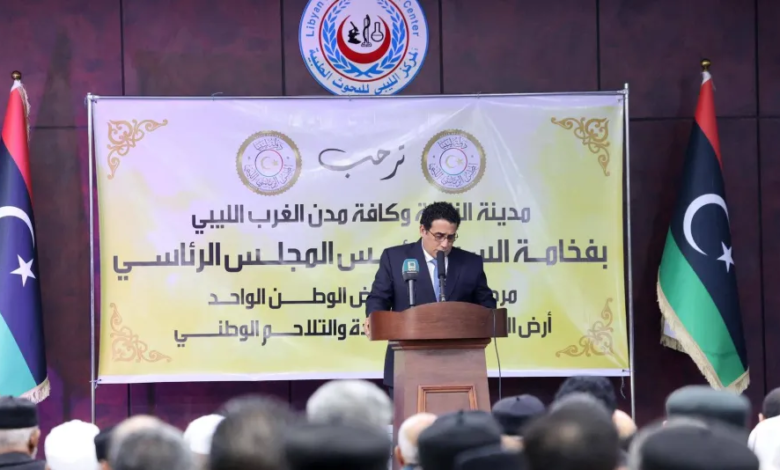
In a new step aimed at enhancing financial transparency and ensuring the equitable distribution of resources, the head of Libya's Presidential Council, Mohammed al-Manfi, issued a decree forming a new committee to regulate public spending. This decision complements a series of measures previously targeting the finance and energy sectors, in an attempt to contain the political and economic disputes that have plagued the country for years.
Decision context and political and economic background
This decision cannot be separated from the complex Libyan landscape, where the country suffers from a deep institutional division between the Government of National Accord in Tripoli and the government appointed by the House of Representatives in the east. This division has cast a dark shadow over the state's fiscal policy, leading to frequent disputes over the management of oil revenues, the lifeblood of the Libyan economy. The Presidential Council had previously proposed the "Higher Financial Committee" initiative as a mechanism to unify spending, and this new committee aims to strengthen these efforts and monitor financial flows to ensure that public funds are not used to fuel the political conflict.
The importance of controlling spending in light of the current crisis
The decision to appoint a new committee is of paramount importance at this time, as Libya faces numerous economic challenges, including a fluctuating exchange rate for the dinar, a liquidity crisis, and an inflated public sector wage bill and subsidies. The new committee aims to establish strict controls to prevent financial waste and corruption, and to ensure that essential services reach all Libyan regions without discrimination. This move is also seen as an attempt to allay concerns among local and international stakeholders regarding the management of oil wealth, particularly in light of repeated threats to shut down oil fields in protest against the perceived unfair distribution of revenues.
International dimensions and unification of financial institutions
Internationally, this move aligns with the recommendations of the United Nations Support Mission in Libya (UNSMIL) and the outcomes of the Berlin Conferences, which have consistently called for the unification of economic institutions, particularly the Central Bank of Libya, and the establishment of a transparent mechanism for managing revenues. The success of this committee in its tasks could pave the way for relative economic stability, a prerequisite for creating a conducive environment for holding the long-delayed national elections. The international community is closely monitoring the Libyan parties' ability to reach a financial agreement, given that the economy is the primary driver of the conflict and may also be the key to its resolution.