
A comprehensive operational plan to serve the pilgrims
The Ministry of Municipal and Rural Affairs and Housing announced the completion of all its preparations and operational plans in Taif Governorate and its affiliated centers, as part of the comprehensive preparations for the 1445 AH Hajj season. These intensive efforts aim to provide the highest quality services to the pilgrims and ensure a safe and convenient Hajj experience, in line with the directives of the wise leadership to dedicate all resources to serving the pilgrims.
Historical context and importance of Taif in the Hajj journey
Taif holds strategic and historical importance during the Hajj season. It not only serves as the eastern gateway to Mecca but also houses one of the five designated points for entering the state of Ihram, Qarn al-Manazil (also known as As-Sayl al-Kabir), from which pilgrims from Najd and the Arabian Gulf states enter Ihram. Throughout history, Taif has been a resting and resupply station for caravans traveling to the Holy Land. In modern times, its infrastructure has developed into a vital logistical hub supporting Mecca during the peak season, receiving large numbers of pilgrims and providing them with essential services before they proceed to perform the rituals.
Details of the Ministry's operational plan
The ministry's preparations in Taif included several key areas to ensure coverage of all service, health, and environmental aspects, most notably:
- Health and Environmental Control: Inspection tours of food establishments, restaurants, kitchens, and grocery stores have been intensified to ensure compliance with the highest food safety standards. Environmental sanitation and disease vector control efforts have also been strengthened to maintain a healthy and safe environment.
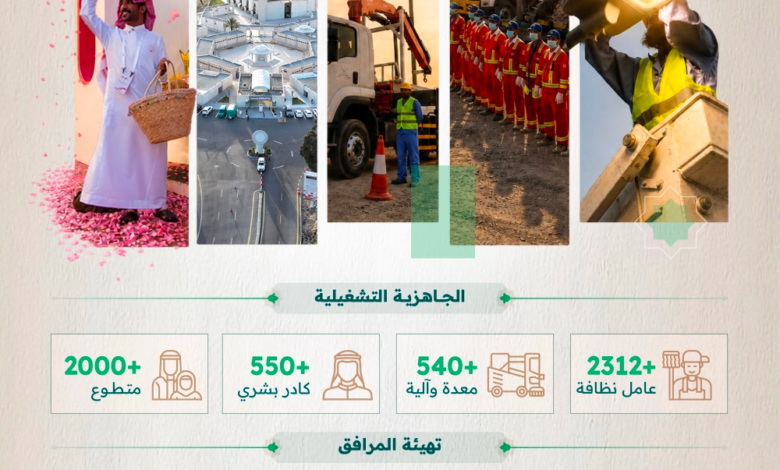
- Public hygiene: Increasing the number of workers and equipment allocated to cleaning and waste removal work around the clock, especially in areas that witness a high density of pilgrims and visitors, such as the vicinity of the Miqat sites and main roads.
- Preparing municipal facilities: Ensuring the readiness of the official slaughterhouses to receive sacrificial animals during the days of Eid al-Adha, and maintaining road networks, lighting, public parks and toilets to serve the residents and pilgrims.
- Emergency teams: Forming fully equipped field teams to deal with any emergencies that may occur during the season, in continuous coordination with all other relevant government agencies.
Expected impact and importance of preparations
These preparations directly impact the pilgrim's experience, contributing to a comfortable and safe environment that facilitates the performance of their rituals with ease and peace of mind. Nationally, these efforts highlight the Kingdom of Saudi Arabia's ability to efficiently and effectively manage and organize one of the world's largest human gatherings, reinforcing its leading position in the Islamic world. Locally, these plans contribute to stimulating economic activity in Taif and underscore its pivotal role as an integral part of the comprehensive Hajj and Umrah services system overseen by the government of the Custodian of the Two Holy Mosques.