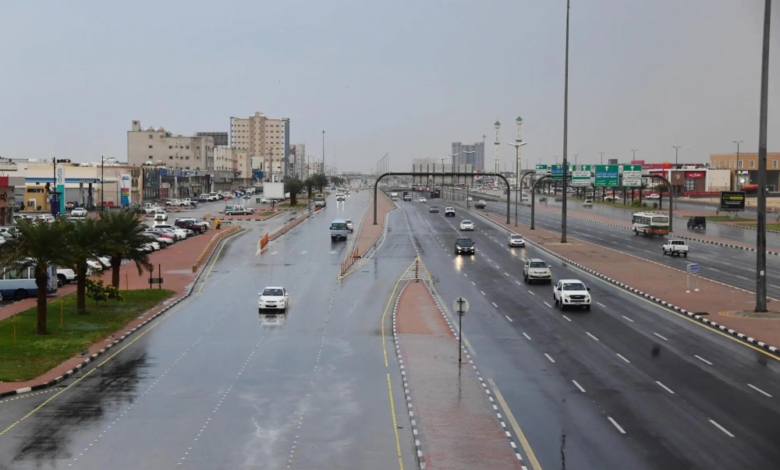

issued The National Center for Meteorology in Saudi Arabia weather for Saturday, revealing unstable weather conditions affecting large areas of the Kingdom. The report indicates that the current weather pattern, combining active winds stirring up dust and sand with the possibility of rain and fog in some areas, will continue. Citizens and residents are advised to take precautions.
Weather details and affected areas
According to the official statement from the Meteorology Department, the impact of active winds that reduce horizontal visibility continues across large parts of northern and central Saudi Arabia. This includes the regions of Tabuk, Al-Jawf, and the Northern Borders, extending to parts of Hail, Al-Qassim, and Riyadh, and reaching into parts of the Eastern Province. These weather phenomena are part of the Kingdom's typical climate due to its vast desert landscape, which is affected by the movement of various air masses.
In contrast, the weather forecast predicts a change in conditions over the southern and western highlands, with the possibility of light rain accompanied by fog, which may affect visibility during the early morning and night hours. This forecast includes parts of the highlands in the Jazan, Asir, and Al-Baha, extending to the highlands of the Makkah.
Importance and weather effects
These weather bulletins are of paramount importance for the safety of highway users, especially those traveling on roads connecting the central, northern, and eastern regions, where dust-laden winds can cause a sharp decrease in horizontal visibility. Residents of mountainous areas are also advised to exercise caution while driving due to fog and rain, which may cause slippery conditions or reduced visibility.
State of the Red Sea and the Arabian Gulf
Regarding maritime navigation, the center explained the details of wave and wind movement as follows:
- The Red Sea: Surface winds are northeasterly to southeasterly, shifting to southwesterly and northwesterly by midday, with speeds ranging from 14-34 km/h in the northern and central parts. The southern part experiences winds reaching speeds of up to 50 km/h towards the Bab el-Mandeb Strait, with wave heights exceeding two meters in that area, resulting in rough sea conditions towards the strait.
- Arabian Gulf: Southeasterly to easterly winds reaching speeds of up to 45 km/h prevail over the northern and central parts, accompanied by thunderstorms and rain, while winds are relatively calm from the west to southwest over the southern part. Wave heights range from one to two meters in the northern and central regions.
Weather experts emphasize that following official bulletins issued by the National Center for Meteorology is an urgent necessity during periods of weather fluctuations to ensure public safety and avoid potential risks.