Al-Qadisiyah defeats Al-Khaleej 1-0 in the Eastern Province derby of the Roshan League

Al-Qadisiyah Football Club's first team succeeded in winning the Eastern Province derby, defeating its neighbor and traditional rival, Al-Khaleej Club, by a score of 1-0, in the popular match that took place at Prince Mohammed bin Fahd Stadium in Dammam on Tuesday evening, as part of the twentieth round of the Saudi Professional League competition.
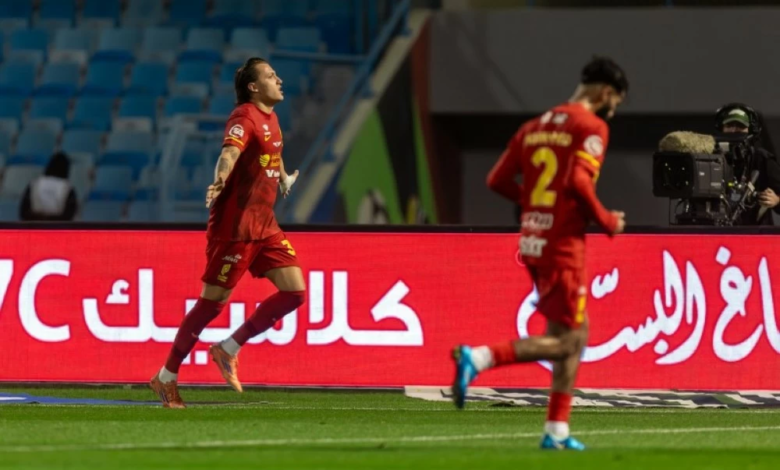
"Benus Cadiz" owes this precious victory to the Italian international striker Matteo Retegui, who scored the only goal of the match in the 41st minute, giving his team three valuable points that strengthened their presence in the golden square, in a match officiated by Salvadoran referee Ivan Barton.
Match details and missed opportunities
The match began with early excitement and a clear desire from the visitors to surprise the home side, as Al-Khaleej started the game with intense attacking pressure. In the third minute, Norwegian striker Joshua King led a dangerous attack, penetrating from midfield into the penalty area and bypassing defender Jihad Zikri, but goalkeeper Ahmed Al-Kassar was alert and made the save, deflecting the ball off his head.
King's threat did not stop there. Just one minute later, he skillfully snatched the ball from between Zikri's legs again, boldly advancing towards Al-Qadisiyah's goal. However, the defensive experience of the Spanish international Nacho Fernandez appeared at the right time to clear the ball at the crucial moment before the shot, saving his team from a certain goal.
The decisive goal and the second half scenario
After absorbing the visitors' initial enthusiasm, Al-Qadsia regained control and launched several organized attacks, one of which resulted in the winning goal four minutes before the end of the first half. The goal came from a perfectly executed pass by Mexican Julian Quiñones, who delivered a low, driven ball to his teammate Mateo Retegui, who didn't hesitate to fire it directly into the net, giving Al-Qadsia the lead.
In the second half, Al-Qadisiyah tried to extend their lead through counter-attacks, and Retegui almost added a second goal after a perfect attack, unleashing a powerful shot, but Al-Khaleej goalkeeper Morris made a brilliant save, pushing it out for a corner. The game remained evenly contested, with no change to the scoreline until the final whistle.
The importance of winning and the battle for the Golden Square
This victory is of paramount importance to Al-Qadisiyah, going beyond just the three points; it comes at a crucial time in the league, as the team seeks to establish itself among the top four to secure a place in continental competitions and compete for titles, benefiting from the international recruitments that have strengthened its ranks this season.
With this result, Al-Qadsia raised their points tally to 43, securing their thirteenth victory and firmly maintaining their fourth-place position in the Roshan League standings. Meanwhile, Al-Khaleej's points remained at 25, suffering their eighth defeat of the season and remaining in eighth place, presenting the team with challenges to get back on track in the upcoming rounds.