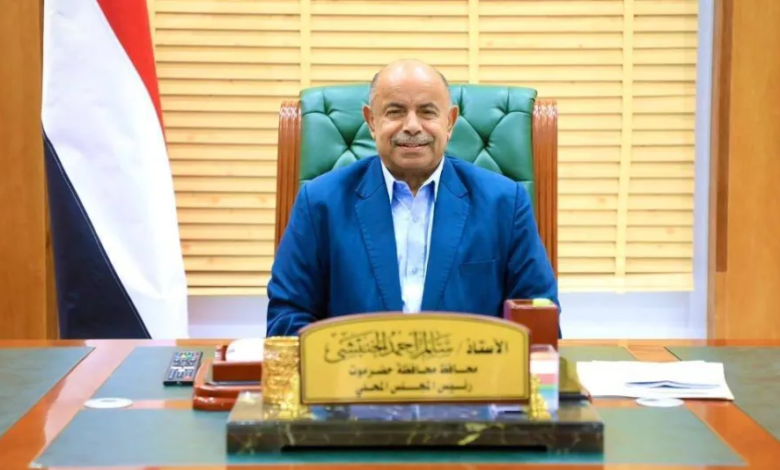
Al-Khanbashi accuses the UAE of violations in Hadramawt: Details of the crisis

In a significant development in the Yemeni political and military landscape, Al-Khanbashi leveled direct and explicit accusations against the United Arab Emirates, alleging widespread abuses and violations in Hadramawt Governorate, Yemen's largest and most strategically and economically important province. These statements highlight the escalating tensions between the various factions in the liberated areas, particularly the sometimes covert and sometimes overt conflict between the legitimate government and local proxies backed by the UAE.
Details of the accusations and interference in sovereignty
Al-Khanbashi indicated that Emirati practices in Hadramawt have gone beyond providing military support within the Arab Coalition, reaching the point of undermining Yemeni state authority and establishing parallel entities not subject to the Ministries of Defense and Interior. Accusations focus on supporting military formations outside the state's control, interfering in the administrative and security affairs of the oil-rich province, and reports of arbitrary arrests and the operation of secret prisons—a long-standing issue that has sparked widespread controversy and criticism from international human rights organizations.
General context: Hadramawt at the heart of the conflict
To understand the implications of these statements, one must consider the historical and political context of Hadramawt Governorate since the outbreak of war in Yemen in 2015. Hadramawt represents the geographical and economic heart of Yemen, possessing a long coastline and extensive borders with Saudi Arabia, in addition to being the country's main oil reservoir. Since the liberation of Mukalla from al-Qaeda in 2016, the UAE has sought to consolidate its influence by training and arming the so-called "Hadrami Elite Forces," creating a duality in security and military decision-making in the face of the First Military Region forces loyal to the legitimate government.
Strategic importance and expected impacts
These accusations gain significance due to the sensitivity of the timing and the region; Hadramawt is not just an ordinary province, but a pivotal element in the Yemeni equation. Locally, these statements could exacerbate popular and political tensions among Hadrami factions, as public opinion is divided between a current demanding "Hadramawt for the Hadramis," independent of either northern or southern control, and other currents loyal to the UAE-backed Southern Transitional Council.
Regionally, these developments reflect the divergent agendas of the two poles of the coalition (Saudi Arabia and the UAE) in southern Yemen. While Riyadh seeks to maintain the cohesion of the legitimate government and secure its southern borders by supporting the formation of the "Hadramawt National Council," Abu Dhabi continues to support its allies in consolidating their influence in the southern and eastern governorates. The continuation of these violations and interventions could threaten the stability of the governorate, which has remained relatively untouched by violent armed conflicts, and could open the door to chaotic scenarios that affect energy security and maritime navigation in the region.
In conclusion, these accusations place the international community and the Arab coalition before their responsibilities to ensure respect for Yemeni sovereignty and the unification of security and military agencies under the umbrella of the state, in order to avoid the safe province slipping into a cycle of violence and internal fighting.