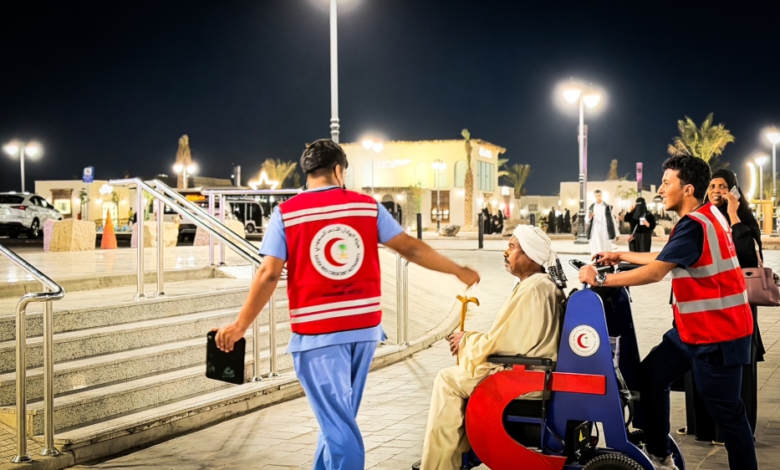
Health achievement: 9 minutes average ambulance response time in the Kingdom

The Saudi Arabian healthcare system has achieved an unprecedented leap in the efficiency of emergency medical services, with the latest statistics for 2025 revealing a record decrease in the average response time to emergency calls. This achievement reflects the rapid development witnessed in the healthcare sector, aimed at protecting lives and reducing health complications resulting from accidents and sudden medical crises.
Record-breaking response times
Official data showed that the average response time of Red Crescent and ambulances dropped sharply to just 9.11 minutes, compared to a previous average of 25 minutes. This time difference is a crucial factor in emergency medicine, as the first few minutes play a vital role in determining the fate of the injured. The system also indicated that the response rate for calls made within 8 minutes or less reached 48.44% during 2025, confirming the high level of preparedness of the field teams and their strategic geographical deployment.
The context of health transformation and Vision 2030
These figures cannot be viewed in isolation from the broader context of the healthcare transformation program, a cornerstone of Saudi Vision 2030. Over the past few years, the Kingdom has focused on restructuring emergency medical services by investing heavily in digital infrastructure, modernizing its ambulance fleet, and connecting operating rooms with the latest GPS and artificial intelligence technologies. This strategic shift has helped overcome logistical and traffic obstacles that previously caused delays in paramedic response, placing the Kingdom among the leading countries in emergency medical services performance indicators.

Technical integration and data accuracy
The system has witnessed remarkable development in electronic connectivity and data accuracy, which has positively impacted the speed of medical decision-making. The accuracy of traffic accident data matching has increased dramatically, reaching 90.4% in 2025, compared to only 48% in 2016. This integration between security and health authorities ensures that appropriate resources are allocated to each case and facilitates hospital admissions of injured individuals based on accurate and up-to-date information, thereby enhancing accident management efficiency and reducing resource waste.
Improved medical outcomes and saved lives
The ultimate goal of reducing response time is to improve patients' clinical outcomes, as confirmed by vital medical indicators. Cardiopulmonary resuscitation (CPR) has seen a significant increase in success rates, with the recovery of a heartbeat reaching 21% in 2025, compared to 7.9% in 2022. This increase translates to saving more lives that were at risk, and is attributed—after God's grace—to the rapid arrival of ambulance teams and the application of advanced treatment protocols in the field before reaching the hospital.
Community impact and sustainability
In addition to field efforts, health authorities continue to raise community awareness about the importance of first aid, making the community a partner in the rescue operation. These positive indicators underscore the Kingdom's commitment to providing safe and reliable healthcare for citizens and residents, enhancing quality of life and ensuring the sustainability of health impacts, thus placing human safety as a top priority in all its development plans.