
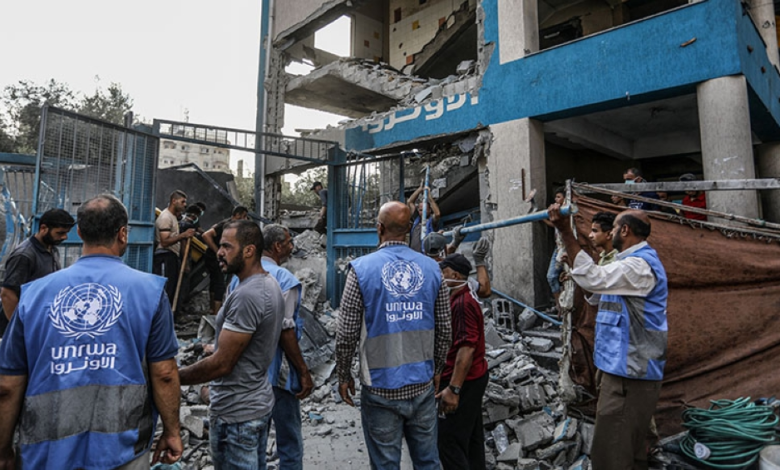
The United Nations Relief and Works Agency for Palestine Refugees ( UNRWA ) announced a difficult decision to terminate the services of hundreds of its local staff in the Gaza Strip, amid a severe financial crisis gripping the international organization. The agency confirmed that this measure, which it described as necessary, was a result of a critical shortage of funding needed to continue its operations and pay its staff salaries.
In detailing the decision, an official UNRWA spokesperson told AFP that the agency had informed 571 local staff members of the termination of their services, effective immediately. The spokesperson explained that this decision specifically targeted staff who had left the Gaza Strip and are currently residing outside it, reflecting the depth of the crisis that is forcing the agency to take drastic austerity measures to maintain a minimum level of its essential operations within the besieged territory.
Background to UNRWA's financial crisis
This decision is not an isolated event, but rather part of a series of financial challenges the agency has faced for years. UNRWA relies almost entirely on voluntary contributions from UN member states. Recently, the agency has faced funding suspensions from several major donors, creating a massive funding gap that has threatened its ability to pay salaries and provide essential services to millions of refugees.
UNRWA was established in 1949 by a resolution of the United Nations General Assembly and was mandated to provide assistance and protection to Palestinian refugees in its five areas of operation: Jordan, Syria, Lebanon, the West Bank and the Gaza Strip, until a just and lasting solution to their plight is found.
Humanitarian and political repercussions
This event is particularly significant given the exceptional circumstances in the Gaza Strip. UNRWA is not merely an employment agency; it is the lifeline providing education, healthcare, relief, and social services to over two million people in the Strip. Reducing its workforce, even if only for those based outside Gaza, sends alarming signals about the organization's financial sustainability at a time when humanitarian needs are unprecedented.
Observers believe that continued funding shortfalls could lead to broader cuts affecting essential services, exacerbating human suffering and increasing instability in the region. The agency consistently appeals to the international community to ensure the necessary funding flow to maintain its operations, which are a key stabilizing factor in the Middle East.