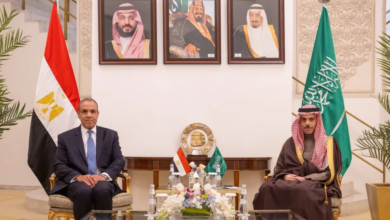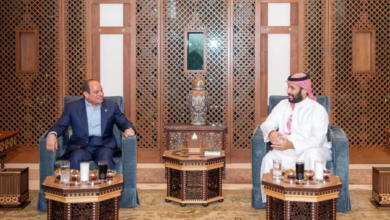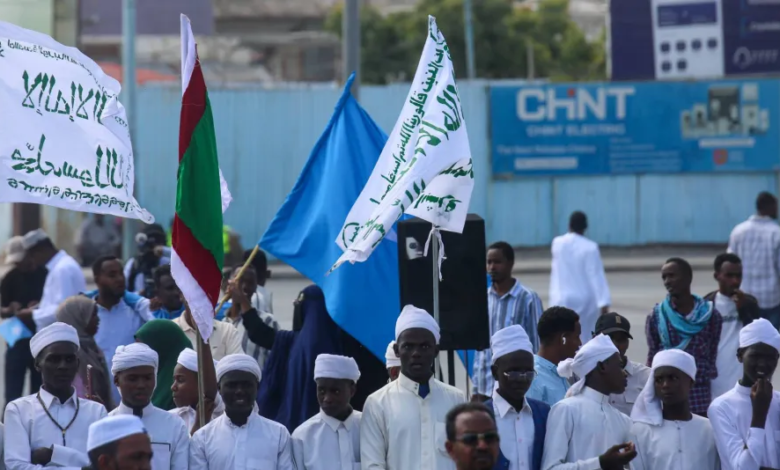

The diplomatic arena in the Horn of Africa is witnessing intense activity, with unified Arab and Islamic positions emerging to curtail any potential Israeli moves in the Somaliland region. This activity comes in response to growing concerns about Israel's attempts to establish a foothold in this strategically sensitive region, exploiting the breakaway region's desire for international recognition.
The strategic importance of the Horn of Africa
Israeli actions and the Arab response to them cannot be understood in isolation from the region's geopolitics. Somaliland overlooks the Gulf of Aden and controls a vital part of the southern entrance to the Red Sea and the Bab el-Mandeb Strait. This waterway is a lifeline for global trade and for Arab national security, particularly for Egypt and Saudi Arabia. Historically, Israel, within the framework of its so-called "Periphery Doctrine," has sought to build alliances with non-Arab states or entities on the periphery of the Middle East and Africa to break the Arab encirclement and secure its maritime and security interests.
The historical and political context of the crisis
The roots of the issue date back to 1991, when the region of Somaliland unilaterally declared its independence from the central government in Mogadishu following the collapse of Siad Barre's regime. Despite enjoying relative stability and a democratic system compared to the rest of Somalia, it has not received formal international recognition. In this context, monitoring reports suggest that Israel may attempt to exploit this diplomatic isolation by offering promises of political or economic support in exchange for strategic and military gains, which the Somali Federal Government considers a blatant violation of its sovereignty and territorial integrity.
Unified Arab and Islamic stance
Faced with these challenges, the Arab League and the Organization of Islamic Cooperation (OIC) have adopted a firm stance, offering unwavering support to the Federal Government of Somalia. Arab states consider any direct dealings with Somaliland outside of Mogadishu, particularly by Israel, a threat to Arab national security. This was reflected in the final statements of recent Arab and Islamic summits, which emphasized the need to respect Somalia's sovereignty and territorial integrity, and rejected any external interference that could lead to the country's division or the militarization of the Red Sea for the benefit of hostile powers.
Regional and international repercussions
The success of Arab and Islamic pressure in curbing Israeli actions reflects a heightened sense of danger. Israeli influence in Somalia not only threatens Somalia, but also extends to the security of Yemen, Egypt's interests in the Suez Canal, and the security of the Arabian Gulf. Therefore, Arab diplomacy is currently working to offer developmental and economic alternatives for Somalia as a whole, to preempt any external temptations that might exploit the region's fragile economic situation to advance political and military agendas.