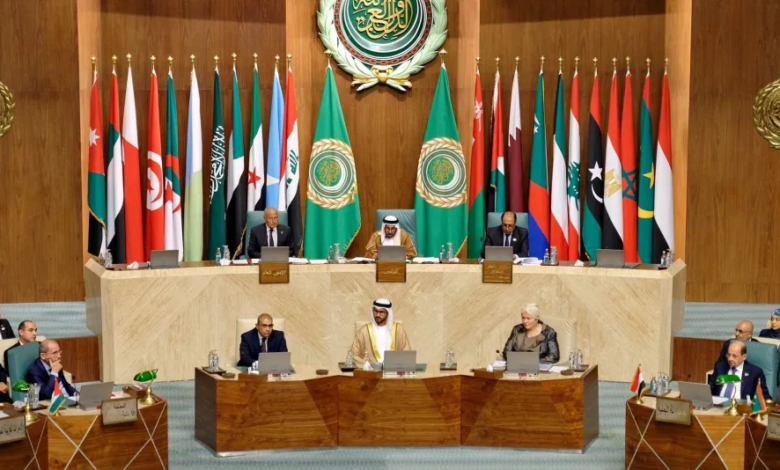

All eyes will be on the headquarters of the League of Arab States in Cairo, Egypt, next Sunday, where an important Arab ministerial meeting will be held to discuss Iranian interference in the internal affairs of Arab states. This meeting comes at a sensitive time for the region, necessitating joint Arab coordination to confront current security and political challenges.
Meeting agenda and the Quartet
The Arab Ministerial Quartet Committee tasked with monitoring developments in the crisis with Iran is scheduled to hold a closed meeting, followed by an expanded meeting of Arab foreign ministers. This committee comprises the Kingdom of Saudi Arabia, the United Arab Emirates, the Kingdom of Bahrain, and the Arab Republic of Egypt, in addition to the Secretary-General of the League of Arab States. The committee aims to prepare a draft resolution to be submitted to the League's Ministerial Council, which will include a detailed assessment of Iranian practices that Arab states consider a threat to Arab national security.
General context and historical background
This meeting is not an isolated event, but rather part of a series of ongoing Arab diplomatic efforts over the years to counter what Arab capitals describe as Tehran's "hostile approach." The Arab League has consistently affirmed in its previous statements its categorical rejection of any infringement upon the sovereignty of its member states, noting that the continued support for armed militias and the provision of weapons, ballistic missiles, and drones to them constitute a flagrant violation of international laws, conventions, and relevant Security Council resolutions.
The importance of timing and expected impact
This meeting is of paramount importance given the rapid developments on both the regional and international stages. Regionally, Arab states are striving to unify their ranks and political stance to ensure the security of waterways and protect international navigation in the Arabian Gulf and the Bab el-Mandeb Strait, areas vital to the global economy.
On the international level, the outcomes of this meeting will send a clear message to the international community and influential powers, emphasizing the need for the world to uphold its responsibilities in maintaining international peace and security and to exert pressure to halt any practices that could destabilize the Middle East region. The meeting is expected to issue a final statement reaffirming the principles of good neighborliness and calling on Iran to cease actions that fuel sectarian and religious conflicts in Arab countries.