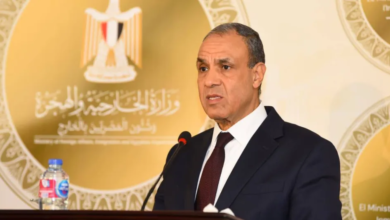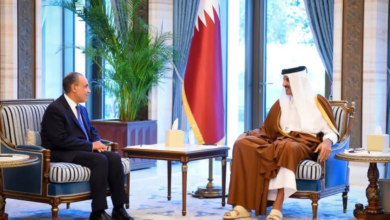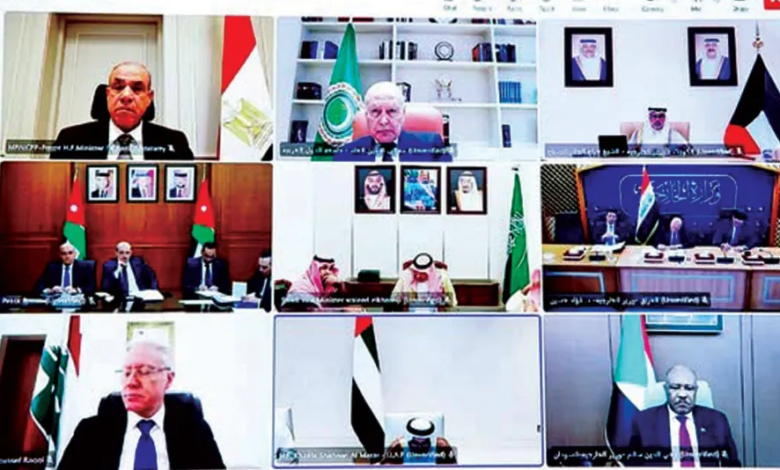
Arab ministerial committee supports response to Iran: Implications and effects of the decision

Introduction: Arab consensus on protecting national security
In a significant development reflecting the Arab consensus on protecting national security, an Arab ministerial meeting affirmed its full support for decisive diplomatic and political responses to Iran's continued interference in the internal affairs of Arab states. This stance comes amidst escalating regional tensions and the urgent need to unify Arab ranks to confront the security and political challenges posed by Tehran's policies in the region, while reaffirming the rejection of any infringement upon the sovereignty and stability of Arab states.
General context and historical background of Arab-Iranian tensions
The roots of tensions between Arab states and Iran lie in decades of political and security disputes. Tehran's expansionist policies and its support for armed militias operating outside the framework of the nation-state have been a constant source of concern for the official Arab order. This concern was embodied in the formation of the Arab Ministerial Quartet Committee tasked with monitoring developments in the crisis with Iran and addressing its interference in the internal affairs of Arab states. This committee periodically assesses the situation and issues recommendations and resolutions that are adopted by the League of Arab States.
Historically, relations have witnessed dangerous escalations, most notably attacks on diplomatic missions and direct intervention in the crises of countries such as Yemen, Syria, Lebanon, and Iraq. These practices have prompted Arab states to take firm stances, sometimes including severing diplomatic ties and intensifying efforts in international forums to expose these practices and protect national sovereignty.
The importance of the ministerial position and its regional impact
The Arab ministerial endorsement of the option to respond to Iranian transgressions carries significant strategic importance regionally. It sends a clear and unified message that any infringement upon Arab national security is a red line that cannot be tolerated. Regionally, this stance contributes to strengthening solidarity among Arab capitals and provides political and legal cover for any diplomatic or legal actions taken by the affected states.
Highlighting the dangers of arming militias, especially in strategic areas such as the Bab al-Mandab Strait and the Red Sea, reflects a deep understanding of the threats to freedom of navigation and the security of global energy supplies, making an Arab response an urgent necessity to restore regional balance.
International dimensions and impact on the global stage
The impact of this firm Arab stance is not limited to the regional level but extends to the international arena. The international community is closely monitoring developments in the Middle East, given the region's geopolitical and economic importance. A unified Arab vision toward Iran strengthens the position of Arab states in their negotiations and dialogues with major powers and places upon the international community its responsibility to pressure Tehran to respect the principles of good neighborliness and the UN Charter.
Moreover, this position coincides with international efforts to curb the spread of weapons and drones used by armed groups to destabilize the region, thus making the Arab position consistent with the goals of international peace and security and relevant Security Council resolutions.
Future aspirations towards regional stability
Despite the firmness demonstrated by the Arab ministerial stance, the ultimate goal remains achieving security, stability, and peace in the Middle East. Arab states consistently affirm that the doors of diplomatic dialogue remain open, provided that Iran commits to changing its regional behavior, ceases interfering in internal affairs, and respects the sovereignty of states. Building normal and sustainable relations requires concrete, practical steps from the Iranian side to build trust, which is the only way to spare the region further conflicts and crises that hinder the development and prosperity of its people.