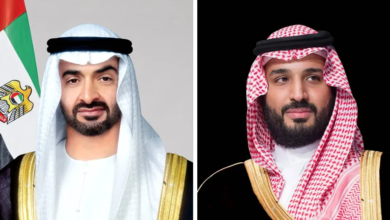
Arab welcome for the Riyadh conference to resolve the southern issue in Yemen

The Arab and Islamic world witnessed a wide welcome and immediate response to the call launched by the head of the Yemeni Presidential Leadership Council, Dr. Rashad Al-Alimi, to hold a comprehensive conference in the Saudi capital, Riyadh, aimed at discussing fair and sustainable solutions to the southern issue, with the participation of all active components.
Historical context and pivotal moment
This call comes at a highly sensitive political juncture for Yemen, as the legitimate government and the Presidential Leadership Council strive to unify internal ranks to confront escalating economic and security challenges. The Southern issue is one of the most complex files that has plagued the Yemeni landscape for decades, particularly since the 1994 civil war, necessitating a wise political solution that guarantees rights within a national consensus framework. This step gains significance as it activates the outcomes of the Yemeni-Yemeni consultations and the declaration of the transfer of power in April 2022, which explicitly stipulated the establishment of a specific negotiating framework for resolving the Southern issue.
The Arab League's position: Rejection of the fait accompli policy
In this regard, the Secretary-General of the League of Arab States, Ahmed Aboul Gheit, welcomed the invitation and the Kingdom of Saudi Arabia's swift response in offering to host and sponsor the conference. In his statement, Aboul Gheit affirmed that the situation in southern Yemen has undeniable historical dimensions and involves genuine grievances that necessitate discussion at the table of a comprehensive national dialogue. The Secretary-General stressed a crucial point: that the policy of "imposing a fait accompli" and unilateral actions do not serve the southern cause, but rather could lead to counterproductive results, exposing the country to further fragmentation. He reiterated the League's commitment to the unity of Yemeni territory.
Islamic praise for the wisdom of the Kingdom
For his part, the Secretary-General of the Organization of Islamic Cooperation, Hussein Ibrahim Taha, praised the leading role of the Kingdom of Saudi Arabia, describing its hosting of the conference as a manifestation of Riyadh's wise and insightful policy of fostering Arab unity. He emphasized that sincere dialogue is the only way to achieve stability, and that addressing major national issues can only be accomplished through consensus that takes into account social and historical dimensions. Similarly, the Muslim World League, through its Secretary-General, Dr. Mohammed bin Abdulkarim Al-Issa, commended this step, affirming that it is a continuation of the Kingdom's unwavering commitment to supporting the Yemeni people in all their diversity.
Qatar supports legitimacy and warns against chaos
At the Gulf level, Qatar expressed its appreciation for Saudi Arabia's efforts and welcomed the Yemeni government's endeavors to address the southern issue through dialogue. The Qatari Ministry of Foreign Affairs, in an official statement, warned of the dangers of unilateral declarations and actions taken without consultation, noting that such actions could push the country toward chaos and undermine the chances of a sustainable political solution. The Ministry called on all parties to adhere to the outcomes of the National Dialogue and the Gulf Cooperation Council initiative.
The strategic importance of the conference
This upcoming conference holds strategic importance that extends beyond Yemen's geographical borders. The stability of the southern governorates is a cornerstone of regional security and international maritime security in the Red Sea and the Bab al-Mandab Strait. Observers also believe that the conference's success in unifying southern factions under the umbrella of legitimacy will thwart projects aimed at fragmenting the state and strengthen the Yemeni government's position in any future UN-sponsored comprehensive peace negotiations to end the Houthi coup and restore state institutions.