
A firm Arab stance: The Arab League condemns Iranian interference
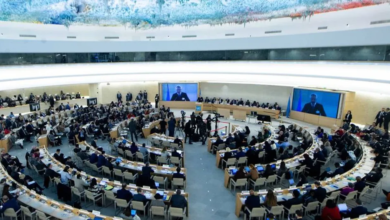
In a decisive move reflecting a unified Arab stance on regional security challenges, the Arab League issued a strongly worded statement unequivocally condemning Iran's continued aggression and blatant interference in the internal affairs of Arab states. The statement focused particularly on issuing a stern warning to the Tehran-backed armed militias operating in Iraq, demanding respect for Iraqi sovereignty and its legitimate institutions. This position comes amidst escalating regional tensions and attempts by some parties to exploit crises to bolster their influence at the expense of the security and stability of Arab peoples.
Historical background of Iranian interventions in the region
Historically, Iran has relied for decades on a strategy of proxy warfare to expand its regional influence, establishing, funding, and arming numerous sectarian militias in several Arab countries. In Iraq, following the 2003 US invasion, Tehran exploited the security and political vacuum to establish armed proxies affiliated with the Iranian Revolutionary Guard. These militias did not limit themselves to military operations but also infiltrated the Iraqi political and economic landscape, weakening the central government's authority and turning Iraq into an arena for settling regional and international scores. The current Arab stance represents a continuation of ongoing efforts aimed at curbing this expansion, which threatens Iraq's Arab identity and the security of its neighbors.
Direct warning to armed militias in Iraq
The statement issued by the six Arab states carried a clear and unequivocal message to the pro-Iranian militias in Iraq, warning them against continuing to implement foreign agendas that harm Iraqi and Arab national interests. These armed groups have become a direct threat not only to Iraq itself, by undermining the rule of law and targeting diplomatic missions, but also to neighboring countries through attempts to target their security and stability. The Arab position affirms that Iraq's stability is a fundamental pillar of Arab national security, and that any threat to this stability will be met with firmness and strength.
Regional and international impacts and repercussions
Regionally, this stance strengthens Arab solidarity and draws red lines against any attempts to destabilize the region. It also sends a reassuring message to the Iraqi people that their Arab neighbors stand with them in their efforts to restore full sovereignty. Internationally, the Arab League's condemnation aligns with international efforts and demands calling for Iran to adhere to the principles of good neighborliness and the UN Charter, and to cease its support for terrorism and armed militias. This Arab and international consensus places increasing pressure on Tehran to reconsider its expansionist policies, which now threaten international shipping lanes and global energy supplies.
The importance of restoring national state sovereignty
In conclusion, this important diplomatic event underscores the necessity of concerted Arab efforts to support national state institutions in Iraq and all Arab countries suffering from foreign interference. Ending the proliferation of uncontrolled weapons and restricting the use of force to official security forces is the only path to achieving development and prosperity. Through this courageous stance, the Arab League reaffirms that Arab national security is indivisible and that confronting Iranian aggression and its militias is a collective responsibility requiring sustained and concerted action.