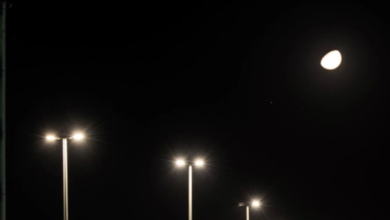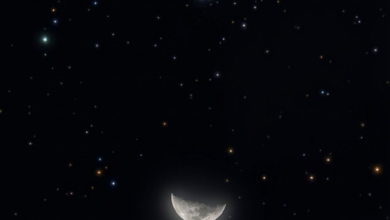

The date of the appearance of the star Arcturus in the skies of the Arab world
Engineer Majed Abu Zahra, President of the Jeddah Astronomical Society, announced a remarkable astronomical event eagerly anticipated by astronomy enthusiasts in the region. Residents of the Arab world will be able to observe the bright star Spica shining clearly on the eastern horizon on the evening of Wednesday, March 18, 2026. This beautiful celestial spectacle will begin to appear around 9:00 PM local time, with slight variations in the timing depending on the observer's geographical location. This exceptional appearance coincides with the approach of the spring equinox, which occurs at the end of that week.
Optical and astronomical properties of the brightest spring stars
Arcturus is the fourth brightest star in the night sky, after Sirius, Canopus, and Alpha Centauri. This giant star is distinguished by its remarkable brilliance and striking yellow-orange color. Abu Zahra explained that the star appears exceptionally bright when near the horizon. Scientifically, this is due to its light passing through dense layers of Earth's atmosphere, causing refraction and optical vibrations. As the Earth continues to rotate and the star rises higher in the sky, this phenomenon gradually diminishes, resulting in a more consistent and stable light.
The historical and cultural context of “Al-Samak Al-Ramih”
Historically, the star Spica holds a special place in Arab and global astronomical heritage. It is the most prominent star in the constellation Boötes and was known to the ancient Arabs as "the Shepherd" or "Guardian of the Sky." In ancient times, before the invention of modern calendars and navigational instruments, ancient civilizations in the Arabian Peninsula and elsewhere relied on the appearance of such bright stars to determine agricultural seasons, travel times, and directions in vast deserts and seas. Its appearance in mid-March was considered a natural calendar, heralding the end of the harsh winter and the approach of warmer weather.
The vernal equinox: a temporal correlation, not a causal one
The appearance of Arcturus in the evening sky during mid-March is a traditional astronomical sign associated by inhabitants of the Northern Hemisphere with the approach of spring and the vernal equinox. During this period, day and night are almost equal in length, after which the days gradually lengthen at the expense of the nights. However, the head of the Jeddah Astronomical Society emphasized an important scientific fact: this association is merely a coincidence. The star has no physical or direct influence on the succession of the four seasons; rather, seasonal changes are primarily linked to the tilt of the Earth's axis and its orbital movement around the sun.
The importance of astronomical observation and its regional impact
Observing such astronomical phenomena is of great importance at both the local and regional levels. From a scientific and educational perspective, these events contribute to raising awareness of space science and astronomy among young people in the Arab world, encouraging them to explore the natural sciences. From a tourism perspective, observing bright stars like Arcturus promotes the concept of "astrotourism" in desert regions and nature reserves, which are characterized by clear skies and distance from the light pollution of cities, attracting amateur astronomers and photographers from around the world.
How to spot and track a star
For those interested in observing the sky, Abu Zahra noted that Spica reaches its highest point around midnight and remains clearly visible until just before sunrise. Like other stars, it rises about four minutes earlier each day due to the Earth's rotation. This daily change causes it to gradually appear closer to sunset over the following weeks, making it easily observable with the naked eye without the need for telescopes or complex equipment, thus remaining a natural astronomical landmark that graces spring nights.