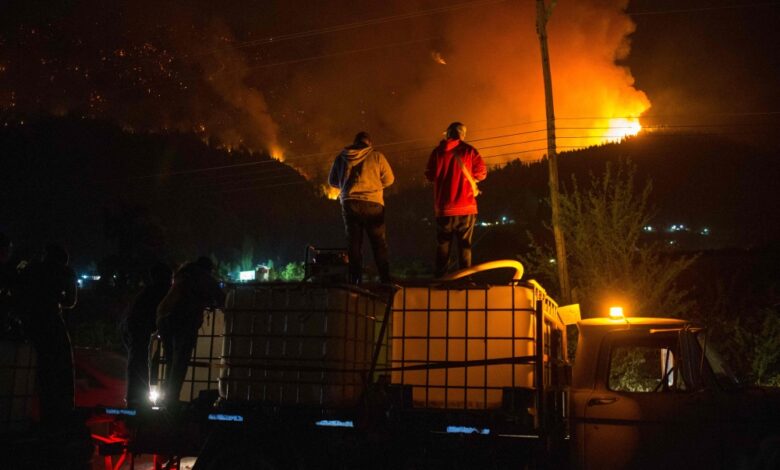

Argentine President Javier Pellegrini has officially declared a state of emergency in the country in response to the escalating environmental disaster caused by devastating wildfires that have swept through the southern region of Patagonia. This decisive measure aims to expedite relief efforts and unify federal and local resources to control the fires, which have spiraled out of control in several vital areas.
Details of the disaster and the distribution of affected areas
According to recent official and media reports, wildfires have consumed over 200,000 hectares since the start of summer in the Southern Hemisphere. A state of emergency has been declared in four major provinces directly affected: Chubut, La Pampa, Nioquén, and Río Negro. This declaration aims to allocate exceptional budgets and facilitate the deployment of troops and equipment necessary to combat the fires, as well as provide urgent assistance to affected residents and farmers who have lost their land.
Climatic context and historical background
Patagonia is a global natural treasure, but in recent years it has faced severe climate challenges. These fires come amid a severe heat wave and drought gripping the region, making its fragile forests easy fuel for the flames. Historically, Argentina experiences seasonal fires, but their frequency and intensity have increased significantly, reflecting the impact of global climate change on South America's environment. The strong winds for which Patagonia is known contribute to the rapid spread of the flames, complicating the firefighters' task and making fire control a formidable logistical challenge.
Expected environmental and economic impacts
The damage caused by these fires is not limited to direct material losses, but extends to pose a long-term environmental and economic threat:
- On the environmental front: The fires threaten Patagonia’s unique biodiversity, including rare species of ancient trees and wildlife that could lose their natural habitats, disrupting the region’s ecological balance for years to come.
- On the economic front: The affected areas are global tourist destinations, and their economies rely heavily on ecotourism and agriculture. These fires are expected to lead to a decline in the tourist season and inflict heavy losses on the agricultural sector, necessitating government plans for economic recovery after the crisis is contained.
Argentine authorities, supported by emergency teams, continue to work around the clock in a race against time to protect what remains of the vegetation and residential areas from this imminent danger.