
ضبط ناقلي مخالفي أنظمة الحج في مكة المكرمة
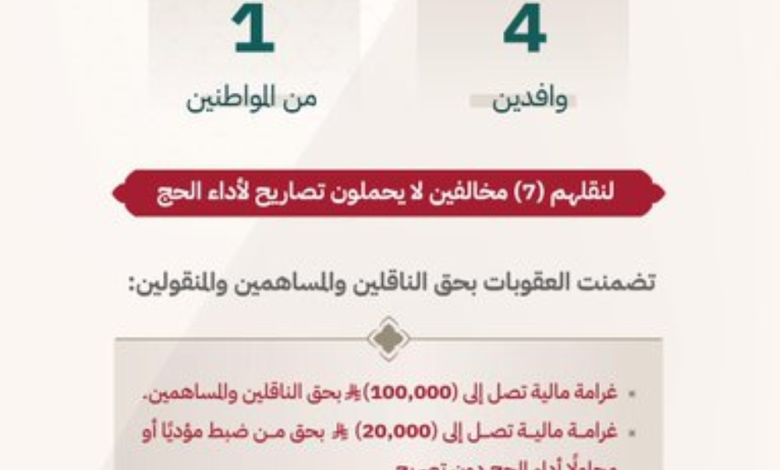
في إطار الجهود الأمنية المكثفة التي تبذلها المملكة العربية السعودية لضمان سلامة وأمن ضيوف الرحمن، أعلنت قوات أمن الحج بمداخل مدينة مكة المكرمة عن ضبط أربعة أشخاص، وهم وافدان ومواطنان، لتورطهم في مخالفة أنظمة وتعليمات الحج. وتتمثل المخالفة في قيامهم بنقل سبعة أشخاص مخالفين لا يحملون تصاريح رسمية لأداء فريضة الحج. تأتي هذه الخطوة الحازمة ضمن حملات التفتيش المستمرة التي تهدف إلى منع أي تجاوزات قد تؤثر على سير موسم الحج.
عقوبات صارمة: السجن والتشهير والترحيل
وقد أصدرت وزارة الداخلية السعودية، عبر اللجان الإدارية الموسمية، قرارات إدارية صارمة بحق المخالفين. شملت هذه العقوبات غرامات مالية ضخمة تصل إلى 100 ألف ريال سعودي بحق الناقلين وكل من يثبت تورطه أو علاقته بمخالفتهم. ولم تقتصر العقوبات على الغرامات المالية فحسب، بل تضمنت أيضاً أحكاماً بالسجن والتشهير بالمدانين، بالإضافة إلى المطالبة بمصادرة المركبات المستخدمة في نقل المخالفين قضائياً.
أما بالنسبة للأشخاص المنقولين الذين حاولوا أداء الحج دون تصريح، فقد فُرضت عليهم غرامات مالية تصل إلى 20 ألف ريال، مع إصدار قرارات بترحيل الوافدين منهم ومنعهم من دخول المملكة العربية السعودية لمدة عشر سنوات كاملة بعد تنفيذ العقوبة.
السياق التاريخي: أهمية تصريح الحج
تاريخياً، تولي المملكة العربية السعودية اهتماماً بالغاً بتنظيم شعيرة الحج، حيث تطورت آليات إدارة الحشود والتنظيم على مر العقود لتواكب الأعداد المليونية التي تفد إلى مكة المكرمة سنوياً. إن اشتراط الحصول على تصريح الحج ليس إجراءً روتينياً، بل هو ضرورة أمنية وتنظيمية ملحة جاءت نتيجة دراسات وخبرات متراكمة. ففي الماضي، كانت التجمعات العشوائية والزيادات غير المدروسة في أعداد الحجاج تؤدي إلى تحديات لوجستية وأمنية كبيرة، بما في ذلك حوادث التدافع والضغط الهائل على الخدمات الصحية والمرافق العامة. لذلك، أطلقت الجهات المعنية حملات توعوية مستمرة تحت شعار لا حج بلا تصريح لضمان توزيع الموارد بشكل عادل وتقديم أفضل الخدمات للحجاج النظاميين.
التأثير المحلي والدولي لتطبيق أنظمة الحج
على الصعيد المحلي، يسهم هذا الحزم في تطبيق الأنظمة في تخفيف العبء عن البنية التحتية في المشاعر المقدسة، ويضمن انسيابية الحركة المرورية وتوفر الرعاية الصحية والخدمات المعيشية لكل حاج. أما على الصعيدين الإقليمي والدولي، فإن هذه الإجراءات الصارمة تعكس التزام المملكة العميق بحماية أرواح المسلمين القادمين من شتى بقاع الأرض. إن نجاح موسم الحج يمثل رسالة طمأنينة للعالم الإسلامي بأسره، ويؤكد قدرة السعودية على إدارة أكبر تجمع بشري سنوي في العالم بكفاءة واقتدار.
دعوة للالتزام بالتعليمات
وفي ختام بيانها، جددت وزارة الداخلية السعودية دعوتها الصارمة لجميع المواطنين والمقيمين والوافدين إلى ضرورة التقيد التام والالتزام بكافة أنظمة وتعليمات الحج. وأكدت أن الجهات الأمنية ستواصل تطبيق النظام بحزم ضد كل من تسول له نفسه المساس بأمن الحجاج أو التحايل على التعليمات المنظمة، لضمان أداء ضيوف الرحمن لمناسكهم في أجواء من السكينة والروحانية والأمان.