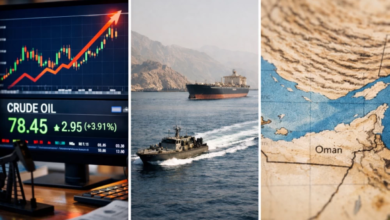
A state of heightened anticipation and caution prevails in the corridors of major Asian economies, as the United States' Asian trading partners assessed the new uncertainty that has engulfed global trade on Saturday. This comes after US President Donald Trump pledged to impose a new round of tariffs on imports, an escalation that came just hours after the Supreme Court struck down several previous tariffs that had fueled the global trade war.
Power struggles and their impact on international trade
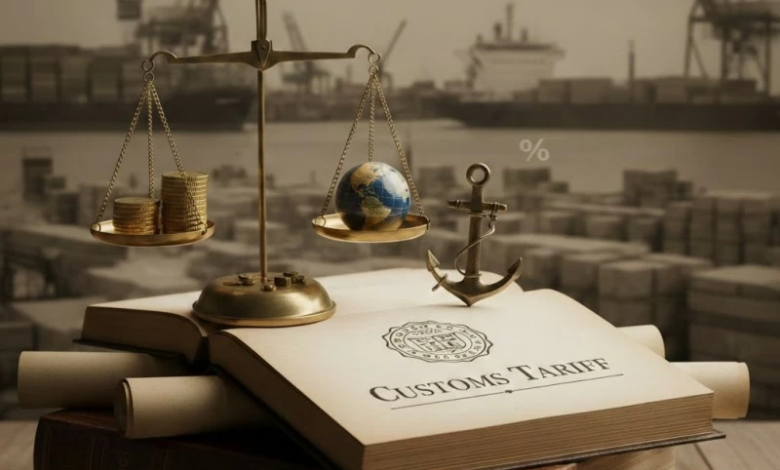
This development represents a new chapter in the conflict between US authorities and its direct impact on the global economy. While the Supreme Court attempted to curb protectionist policies by overturning tariffs imposed by the Trump administration on key Asian countries such as China, South Korea, and Japan, the US president responded with unprecedented speed, confirming his intention to impose a blanket 10% tariff on all imports coming into the United States from all countries, initially for a period of 150 days, based on various legal justifications.
Economic analysts believe that this move not only threatens a return to trade tensions, but could also lead to a reshaping of global supply chains, placing companies and investors before complex logistical and financial challenges, especially in light of warnings of the possibility of additional measures that could increase market confusion.
Japan and Taiwan: Allies under pressure
In Tokyo, the official response was marked by cautious diplomacy. A Japanese government spokesperson stated that the country would "carefully study" the details of the court ruling and the presidential response, emphasizing that Tokyo would respond appropriately to protect its interests. Japan, with its advanced automotive and technology industries, is among the countries most sensitive to any changes in US tariffs.
In Taiwan, a hub of the global technology industry thanks to its dominance in the semiconductor sector, the government announced it was closely monitoring the situation. A statement from the Taiwanese cabinet indicated that the initial impact appeared limited, but the government would maintain open communication channels with Washington to understand the implementation mechanisms. This comes at a sensitive time for Taiwan, which recently signed two agreements with the United States, one of which included a massive $250 billion investment commitment, in an effort to strengthen economic ties and avoid retaliatory tariffs.
China and Hong Kong: Divergent positions
On the other hand, Beijing issued no immediate official comment, given the timing of the events with a long local holiday. As China prepares to welcome President Trump in late March, a senior Hong Kong financial official described the situation in the United States as a "complete failure." Hong Kong enjoys a special status that allows its products to face lower tariffs compared to mainland Chinese exports, giving it relative flexibility in maintaining trade flows despite escalating geopolitical tensions between the two superpowers.
These rapid changes are putting the global economy to a difficult test, as everyone awaits next Tuesday, the date the new tariffs will take effect, to assess the real impact on inflation rates and international trade.