9 astronomical phenomena that will grace the skies of Saudi Arabia in March 2026

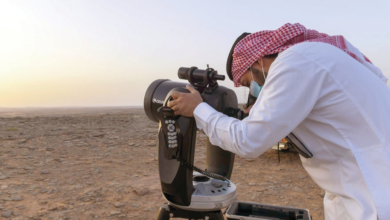
The Imam Turki bin Abdullah Royal Reserve Development Authority has announced the astronomical calendar for March 2026, revealing nine distinctive astronomical phenomena that will grace the Kingdom's skies, providing an ideal opportunity for astronomy enthusiasts and photographers to document these magnificent spectacles. These phenomena further enhance the reserve's standing as one of the world's leading destinations for astronomical tourism.
Dark Sky Sanctuary: An ideal environment for observation
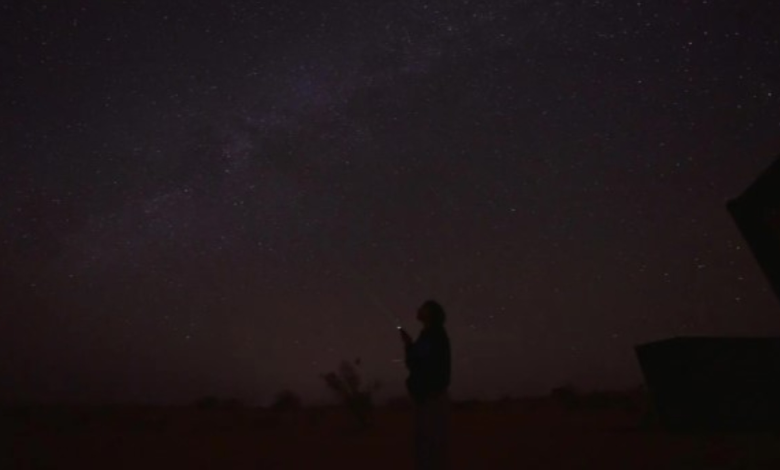
The observation area in the Great Nafud Desert within the reserve is a designated site by the International Dark-Sky Association, covering a vast area of approximately 13,416 square kilometers. This area is among the least light-polluted in Saudi Arabia and the region, allowing for a clear view of the celestial sphere and the Milky Way galaxy with the naked eye—a view often lacking in major cities due to artificial light pollution.
This region is of great geographical and environmental importance, as it combines picturesque desert terrain with clear skies, making it a natural open laboratory for scientists and researchers, and a haven for those seeking tranquility and contemplation of the greatness of the universe.
Astronomical calendar details for March
The authority explained that the astronomical calendar for March 2026 is full of diverse events, as the phenomena begin on the second of the month with the conjunction of the moon with the star “Pollux”, followed immediately on the third of March by the full moon, where the moon disk appears fully illuminated at 100%, which is the most suitable time for night photography of the Earth under the light of the moon.
On March 6, observers will witness the conjunction of the Moon with Spica, the brightest star in the constellation Virgo. The Moon will then progress through its phases, reaching its last quarter on the 11th and its new moon on March 19th, the best night for observing faint celestial objects and nebulae due to the absence of moonlight.
The vernal equinox and planetary conjunctions
March 20th marks a significant astronomical event: the vernal equinox. On this day, the sun is directly overhead at the equator, resulting in nearly equal day and night lengths across the globe. This signals the beginning of spring in the Northern Hemisphere. This day also coincides with a beautiful conjunction between the moon and Venus, the brightest planet in our solar system.
The sky concludes its displays in the last third of the month with the conjunction of the moon with the famous Pleiades star cluster in the Arab heritage on March 23, followed by the first quarter phase on March 25, and the curtain falls on the events of the month with the conjunction of the moon with the gas giant Jupiter on March 26.
Promoting astronomical tourism in Saudi Arabia
The interest in these phenomena comes within the framework of the Kingdom’s efforts to promote ecotourism and astronomy within Vision 2030. Through these events, the Imam Turki bin Abdullah Royal Reserve Development Authority seeks to raise awareness of the importance of preserving the natural environment and reducing light pollution, and to provide a unique tourism experience that combines scientific knowledge and enjoyment of the beauty of pristine nature.