Australian bushfires: State of disaster declared in Victoria, fears of worse to come

Australian authorities declared a state of disaster on Saturday in the southeastern part of the country, specifically in the state of Victoria, in response to escalating bushfires that have spiraled out of control, destroying vast areas of property and forest land. This declaration comes amid severe weather conditions that have raised concerns about a repeat of previous environmental disasters.
Details of the disaster declaration and emergency powers
Victorian Premier Jacinta Allen has issued a formal declaration of a state of disaster, a legal measure that grants authorities and firefighters extraordinary powers, including the ability to carry out forced evacuations of threatened areas to ensure the safety of residents. Allen stated firmly, "The primary objective is to protect the lives of Victorians. This declaration sends a clear and unequivocal message: if you are told to leave, leave immediately and without hesitation.".
These fires coincided with a severe heatwave that hit the state and its capital, Melbourne, where temperatures exceeded 40 degrees Celsius, accompanied by hot and dry winds that contributed to fueling the fires and their rapid spread in the native forests, especially near the town of Longwood.
Financial losses and fears of a repeat of the "Black Summer"
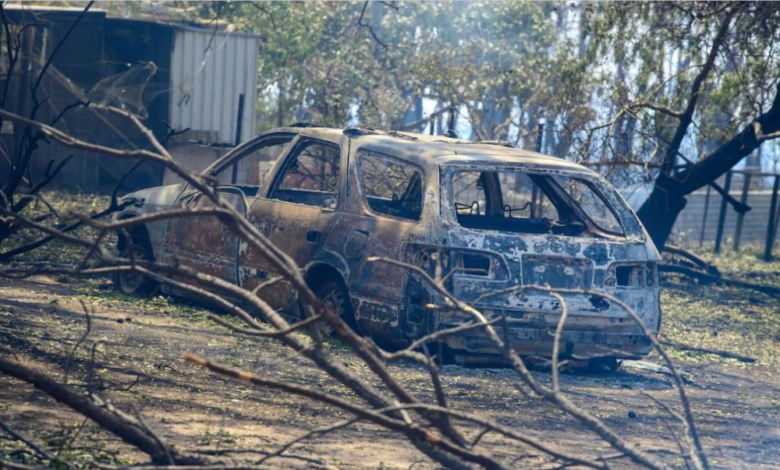
Tim Wibush, Victoria's emergency manager, revealed the initial extent of the damage, stating that at least 130 structures, ranging from homes and cottages to other rural buildings, had been destroyed by the fires. One of the deadliest blazes has burned an estimated 150,000 hectares, dealing a significant blow to the region's ecosystem.
These scenes are reminiscent of the tragic "Black Summer" that struck Australia in late 2019 and early 2020, one of the worst bushfire seasons in the country's modern history, causing devastating environmental and economic losses and the deaths of millions of animals. Authorities fear that similar current conditions could lead to similar scenarios if the situation is not contained quickly.
Climate change and its role in exacerbating disasters
In a related context, experts and researchers link the increasing frequency of these intense fires to global warming. Scientific data indicates that Australia's climate has warmed by an average of 1.51 degrees Celsius since 1910. This rise in temperatures directly leads to extreme weather patterns, which exacerbate the drying out of vegetation and make forests readily flammable, thus making it more difficult to control fires, both on land and in terms of their widespread impact.
Continued field efforts
Although three missing people, including a child, have been found safe and sound, the danger remains. Official reports indicate that 10 major fires are still burning, with warnings that some could continue for days or even weeks. Hundreds of firefighters from across Australia, supported by heavy machinery and firefighting aircraft, have been mobilized in a desperate effort to contain the blazes and protect populated rural areas.