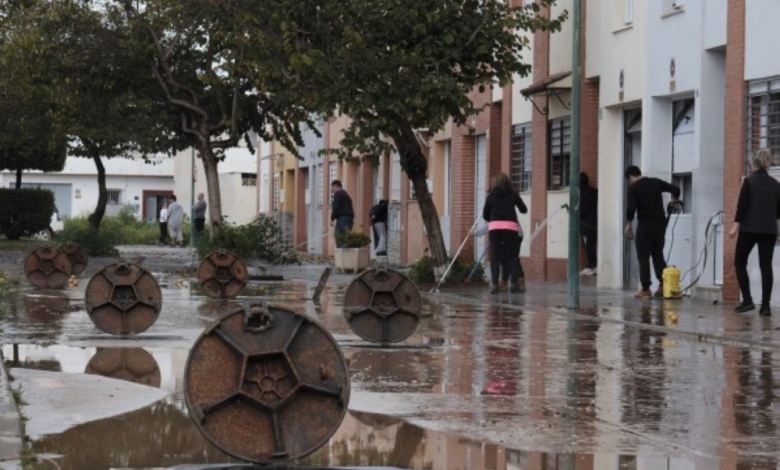
Spanish authorities announced on Monday that the death toll from the devastating floods that struck the south of the country had risen to three, after search and rescue teams found the bodies of two men who had been missing following a wave of heavy rain and flash floods.
These tragic developments have once again highlighted the climate challenges facing the Iberian Peninsula, with local officials confirming that rescue teams have been working tirelessly to reach the affected areas in the provinces of Malaga and Granada.
Details of the tragedy in Granada and Malaga
In the field, the Spanish Civil Guard reported finding the body of a 20-year-old man approximately three kilometers from where he was swept away by the current. According to Spanish state television, the victim was attempting to cross a river near Granada when its water level suddenly and dangerously rose. He was riding a motorcycle when he lost control and was swept away by the strong current.
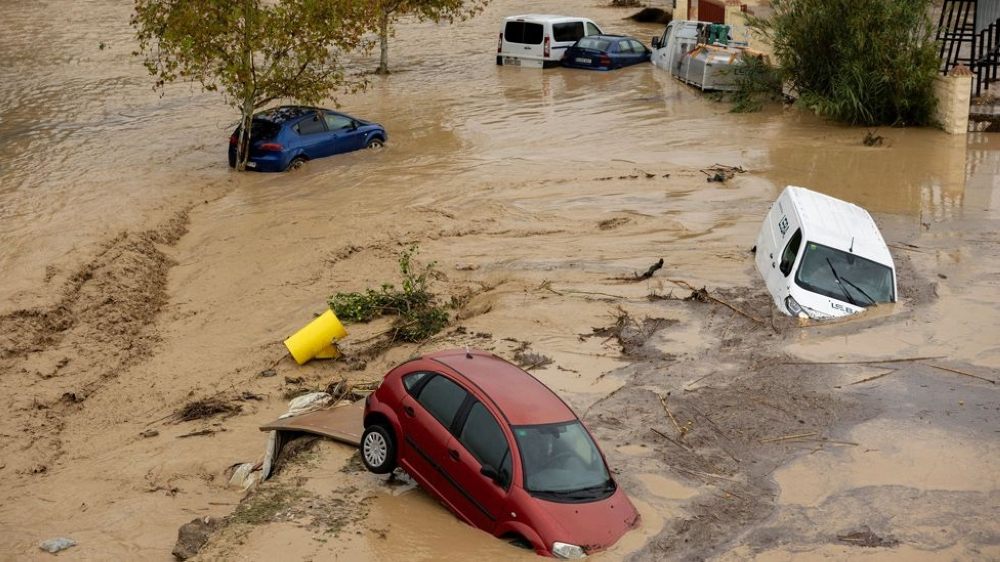
In a separate incident that compounded the tragedy, Antonio Bermúdez, mayor of Alhaurín el Grande in the province of Málaga, confirmed the discovery of another man's body after his vehicle was swept away by the floods. The tragedy didn't end there, as rescue teams later found the body of his passenger in the same vehicle. Bermúdez explained that both victims were men in their early fifties, adding that the area was deeply saddened by the flooding.
Official mourning and a halt to all aspects of life
In response to these tragic losses, the town of Alhaurín el Grande declared Tuesday a day of official mourning and canceled all public events and celebrations. The mayor, in a poignant statement, said, "No one in Alhaurín el Grande feels like celebrating anything at this time," reflecting the shock and grief felt by residents in the wake of these devastating floods.
Climate context and disaster recurrence
These events cannot be separated from the general context of climate change that Europe, and southern Europe in particular, is experiencing. Spain has been significantly affected by global warming in recent years, leading to fundamental changes in weather patterns, characterized by longer and more intense heat waves, followed by sudden and heavy rainfall that the dry soil cannot absorb, causing flash floods.
This incident brings to mind the major disaster that struck Spain in October 2014, when historic floods left more than 230 dead, mostly in the Valencia region in the east of the country. That disaster, considered one of the worst natural disasters in modern Spanish history, continues to haunt the collective memory of Spaniards and heightens anxiety with each new weather warning.
Meteorologists believe that rising temperatures in the Mediterranean Sea contribute to fueling storms and increasing atmospheric humidity, making extreme weather phenomena, such as isolated upper-level depressions (known locally as DANAs), more frequent and violent, which calls for strengthening infrastructure and early warning systems in threatened areas.