Hail weather today: Meteorology warns of strong winds and reduced visibility

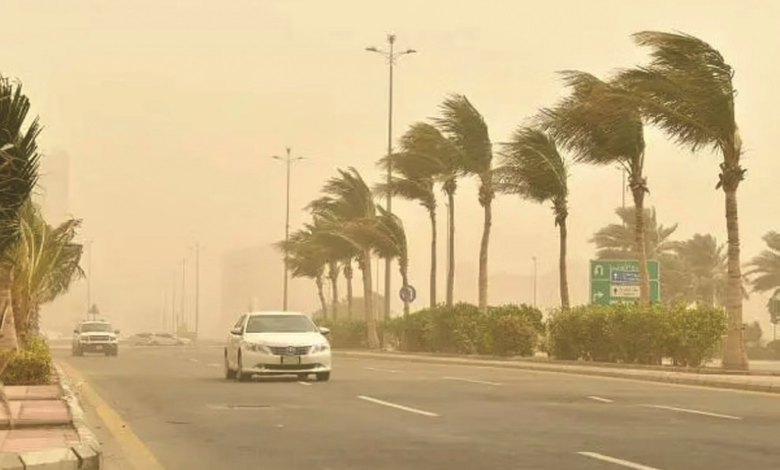
The National Center for Meteorology in Saudi Arabia issued the Hail , warning of strong winds that may directly affect aspects of daily life and traffic.
The center explained in its report that this weather condition includes open areas and highways connecting Hail to neighboring governorates, noting that the winds will stir up dust and sand, causing a significant decrease in horizontal visibility to between 3 and 5 kilometers. The meteorological department confirmed that this active weather condition will continue, God willing, until 6:00 PM today.
The context of the weather conditions and their impact on the regions of the Kingdom
These weather fluctuations are not limited to the Hail region alone, but are part of a weather system affecting large parts of the Kingdom. The center had previously predicted in its daily weather report that surface winds would stir up dust and sand in several other regions, including Mecca, Riyadh, Medina, Qassim, Tabuk, Al-Jawf, and the Northern Borders, extending to the eastern parts of the southwestern highlands. This report reflects the atmospheric instability characteristic of the transitional periods between seasons in the Arabian Peninsula.
The geographical and climatic importance of the Hail region
These warnings are particularly important given the geographical nature of the Hail region, located in the north-central part of the Kingdom and characterized by its diverse terrain, ranging from mountains to open plains. This terrain makes its highways susceptible to strong winds, requiring drivers to exercise extreme caution. Active, dust-laden winds are a common weather phenomenon at this time of year, but their intensity varies, necessitating continuous monitoring of weather forecasts.
Safety and prevention guidelines
In light of these conditions, weather experts and public safety authorities advise citizens and residents to follow a set of important guidelines:
- For drivers: It is necessary to leave a sufficient safety distance between cars, use warning lights when visibility is poor, and avoid high speeds, especially on external and open roads.
- For respiratory patients: It is advised to avoid direct exposure to dust and dirt, to stay indoors as much as possible, and to wear masks when going out when absolutely necessary, as these conditions increase the severity of asthma and allergy symptoms.
These continuous alerts from the National Center of Meteorology come as part of its efforts to enhance community awareness and protect lives and property, by providing accurate and up-to-date information about climate changes, which contributes to raising the level of preparedness of service providers and individuals alike.