The Security Council will discuss the arrest of Maduro in an emergency session on Monday

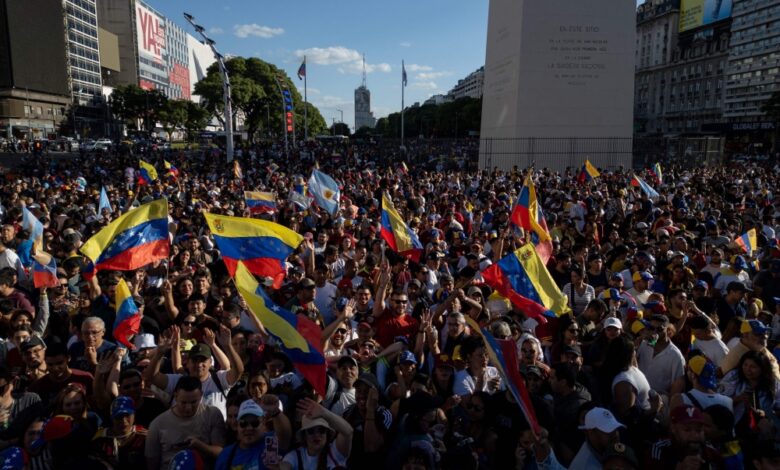
Diplomatic sources at the United Nations announced that the Security Council will hold an emergency meeting on Monday to discuss the rapidly evolving situation in Venezuela, following the US military operation that led to the arrest of President Nicolás Maduro. The Somali mission, which holds the rotating presidency of the Security Council this month, confirmed to AFP that the meeting is scheduled for 10:00 AM New York time (3:00 PM GMT).
The call for this session came at the formal request of Colombia, which currently holds a non-permanent seat on the Council, on behalf of the Venezuelan government. This move comes at a time when the international community is deeply divided over the legality of the US military operation and its implications for the national sovereignty of UN member states.
Background to the historical tension between Washington and Caracas
This dramatic event cannot be separated from the context of years of deep-seated hostility between the United States and Venezuela. Since the rise of the Chavista movement to power, and particularly during Nicolás Maduro's rule, tensions have escalated, with Washington imposing a series of harsh economic sanctions on Venezuela's oil sector and prominent government figures. The US Department of Justice had previously indicted Maduro and other officials on charges of "terrorism and drug trafficking," offering substantial financial rewards for information leading to their arrest, which, from the US perspective, paved the way politically and legally for this operation.
Confrontation scenarios in the Security Council
Monday's session is expected to witness a heated diplomatic confrontation between the major powers. While the United States and its allies will defend the operation as a necessary measure to enforce the law and restore democracy, Russia and China—both permanent members of the Security Council with veto power and strategic ties to Caracas—are likely to unite in condemning what they might describe as a "flagrant violation of the UN Charter" and an "infringement on the sovereignty of an independent state." Analysts suggest that the session may not produce a binding resolution due to the anticipated use of the veto, but it will serve as a key platform for shaping international positions.
Potential regional and international repercussions
This event has far-reaching geopolitical implications that extend beyond Latin America. Regionally, Maduro's arrest could lead to a political vacuum or security instability in Venezuela, impacting neighboring countries, particularly Colombia and Brazil, which host millions of Venezuelan refugees. Internationally, the event raises serious questions about the future of international relations and the principle of non-intervention, and may prompt other countries opposed to Western policies to strengthen their military and political alliances in anticipation of similar scenarios.