Al-Jubeir: The 2026 International Mining Conference will boost mineral diplomacy

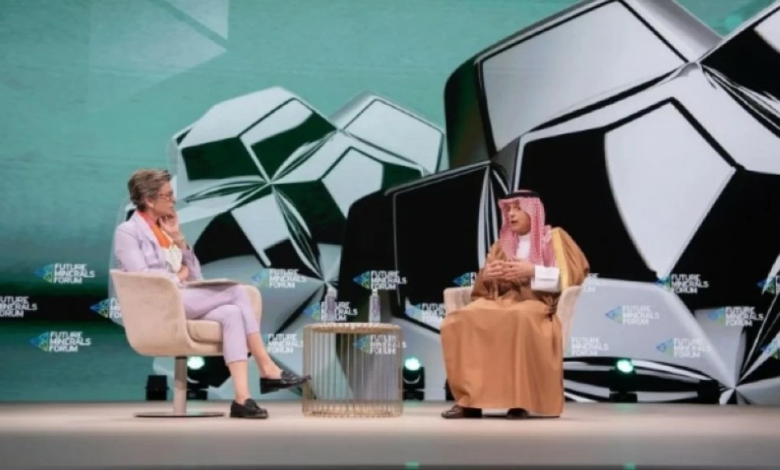
Minister of State for Foreign Affairs, Cabinet Member, and Climate Envoy, Adel Al-Jubeir, affirmed that the International Mining Conference 2026 , held in Riyadh, has successfully established itself as a pivotal global platform, bringing together more than 100 countries active in the mining and industrial sectors. The conference aims to address shared challenges facing supply chains, diversify investment opportunities, and build a deeper and more comprehensive understanding of the growing global demand for critical minerals.
Al-Jubeir's remarks came during his participation in a strategic dialogue session entitled "How can diplomacy help mineral-producing countries compete globally for minerals?" as part of the conference, which is witnessing a high-level international presence.
Global context: The race for critical metals
This conference is being held at a time of radical transformations in the global energy sector, with unprecedented global demand for strategic minerals such as lithium, copper, and cobalt, which are vital to modern industries, clean energy technologies, and electric vehicles. This session of the conference is particularly important given the urgent need to secure reliable and sustainable supply chains, insulated from geopolitical tensions that could disrupt the flow of these vital resources.
The concept of “metal diplomacy”
In a unique presentation, Al-Jubeir discussed the modern concept of "mineral diplomacy," describing it as one of the most important avenues for international cooperation in the 21st century. This concept is based on constructive dialogue and the building of long-term strategic partnerships between resource-producing countries (those possessing the resources) and consuming countries (industrialized nations), with the participation of the private sector and international organizations.
Al-Jubeir clearly indicated the need to change the traditional model of mining relations, calling for a shift towards investing in downstream and downstream industries within the countries of origin themselves. He focused particularly on refining and mineral processing, emphasizing that this approach contributes to:
- Maintaining the local value chain.
- Creating quality job opportunities in developing countries.
- To promote the economic and social stability of producing countries.
He explained that this integrative approach supports global interdependence and reduces conflicts, as all parties benefit from a system based on common interests rather than zero-sum competition.
The Kingdom: A global logistics and mining hub
In discussing Saudi Arabia's role, Al-Jubeir stated that the Kingdom, by virtue of its strategic geographic location linking three continents (Asia, Africa, and Europe) and its control over the world's most important waterways for trade, is well-positioned to lead this global movement. He added that the Kingdom's vast reserves of energy and largely untapped mineral wealth place it at the heart of the new global energy equation.
Al-Jubeir concluded by emphasizing that the Kingdom, home to the holy cities of Mecca and Medina, recognizes its religious, moral, and political responsibility to promote global stability. Through its Vision 2030, it seeks to be a bridge for communication, contributing to conflict reduction and building effective and impactful international partnerships that serve humanity and ensure a sustainable future for energy and industry.