The Ministry of Education exempts 7 categories from central exams for the first semester

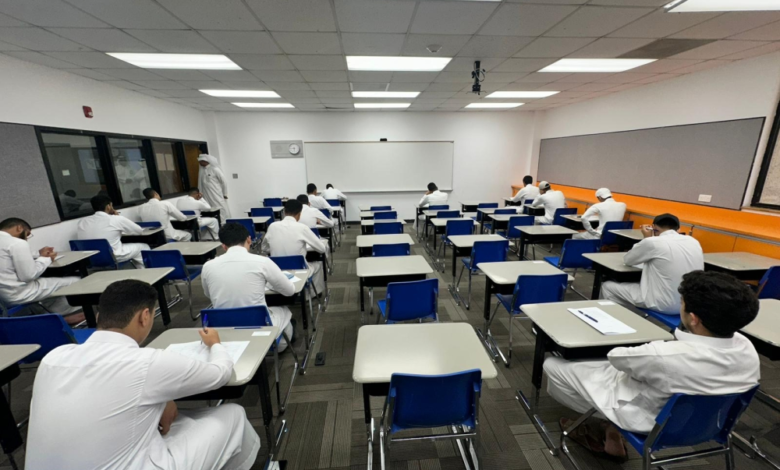
The Saudi Ministry of Education has issued an official decision exempting seven specific categories of students from taking the standardized tests scheduled for the first semester. This decision comes as part of the Ministry's ongoing efforts to develop the educational assessment system and ensure the highest standards of fairness and objectivity in measuring learning outcomes, while taking into account individual differences and the specific circumstances of some educational environments.
General context and importance of centralized tests
Standardized testing is one of the strategic tools adopted by the Ministry of Education in recent years as part of the National Transformation Program and the Kingdom's Vision 2030. These tests aim, in general, to standardize measurement and evaluation criteria across schools, enabling decision-makers to obtain accurate and reliable data on students' academic achievement in core subjects. The Ministry has consistently worked to develop these tools to identify learning gaps and formulate appropriate remedial plans. However, field experience has demonstrated the need for greater flexibility in addressing specific cases to ensure the accuracy of overall indicators.
Details of categories exempt from tests
The ministry explained in its circular that the exceptions were carefully considered to include categories that require different assessment tools or those that have achieved excellence criteria that exempt them from this procedure. The list included:
- Distinguished schools: These are schools that have achieved a level of excellence in educational achievement, and their exclusion is considered a kind of incentive to sustain high performance.
- Continuing education schools: due to the nature of their programs and their different time and educational paths compared to general education.
- Special education students: This includes all categories of special education in public schools and special education schools and institutes, given their need for specialized assessment tools that suit their abilities.
- Students on overseas scholarships: such as students in the "Future Falcons" program, due to the different educational frameworks applied to them.
- Students with special circumstances: those who take their exams outside of school or remotely for reasons that are officially approved.
- Private schools with alternative curricula: provided that the curricula are not enrichment-based and have official approval covering the academic year 1447 AH.
Monitoring and evaluation mechanisms via the Noor system
Regarding procedural aspects, the Ministry affirmed the continued activation of the "Monitoring" initiative as a key analytical tool. It directed schools to process student grades using Excel files extracted directly from the "Noor" system, ensuring that these files include only the student's name and grade for analytical purposes. The Ministry also stressed the importance of retaining all exam documents as official records. Furthermore, it emphasized the need to develop remedial and enrichment plans based on the results of continuous assessment throughout the school day to ensure that students exempt from centralized exams do not experience any skill gaps.
The expected impact of the decision on the quality of education
This decision has multiple positive dimensions on both the educational and administrative levels. On the one hand, it reinforces the principle of equal opportunity by exempting students with special needs from standardized tests that may not accurately measure their true abilities. On the other hand, exempting these students helps to refine the statistical data resulting from centralized tests, making the results of other schools more representative of the overall situation. This, in turn, helps the Ministry and education departments to develop more accurate and effective development plans and to direct support to the schools that truly need it.