Emergency meeting of the Human Rights Council on Iran with international support

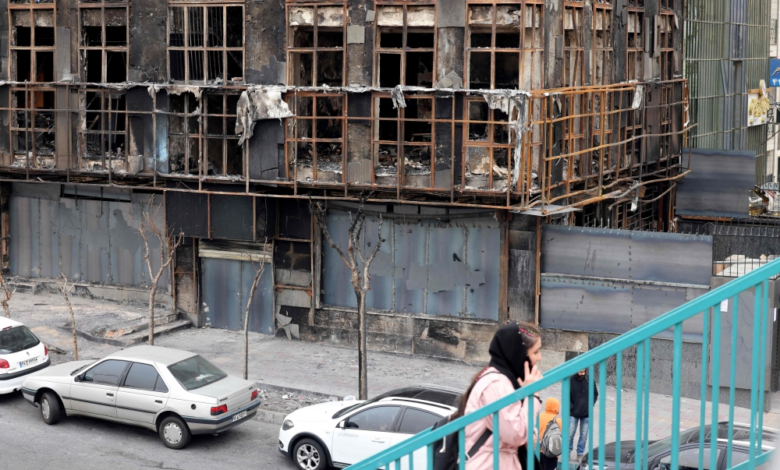
The United Nations has officially announced that its Human Rights Council will hold an emergency meeting next Friday to discuss the serious and ongoing deterioration of the human rights situation in Iran. This international move comes in response to the Iranian authorities' violent crackdown on anti-government protests, which has raised widespread concern in diplomatic and human rights circles worldwide.
joint diplomatic move
At a press conference in Geneva, the spokesperson for the Human Rights Council, Pascal Sim, explained the details of this diplomatic effort, noting that the call for this special session was a joint initiative of Iceland and Germany, with support from North Macedonia, Moldova, and the United Kingdom. Support was not limited to these countries; more than twenty other member states of the Council expressed their full support for the request, reflecting a growing consensus on the need to hold Tehran accountable.
The list of supporting countries includes influential international and regional powers such as France, Italy, Japan, South Korea, Spain, and Switzerland, in addition to 30 observer states, including Canada, Australia, and Sweden. The five countries leading the initiative emphasized in their letter to the Council President that the situation is of an "urgent nature" requiring immediate intervention, citing credible reports documenting horrific acts of violence and flagrant violations of international law.
Historical context and accumulation of crises
This emergency meeting cannot be separated from the broader context that Iran has been experiencing for years. The current situation is reminiscent of the massive wave of protests that erupted in late 2022 following the death of young Mahsa Amini while in the custody of the morality police. That incident marked a pivotal turning point in the relationship between the Iranian public and the ruling regime, breaking the barrier of fear and leading to demonstrations that lasted for months, which the authorities met with widespread arrests and death sentences.
The reports in the news article indicate that the recent protests, which began on December 28, initially came as a reaction to the deteriorating living and economic conditions, before quickly turning into a political movement raising slogans demanding a radical change in the power structure established since 1979. The Iranian economy is suffering from enormous pressure as a result of international sanctions and mismanagement, which has led to high inflation rates and a decline in the purchasing power of citizens, which is considered a constant fuel for social unrest.
International repercussions and the UN position
This meeting carries profound political implications that go beyond mere verbal condemnation. Strategically, this move increases Tehran's diplomatic isolation and positions human rights as a major obstacle to any attempts to revive the nuclear agreements or improve economic relations with the West. It also reinforces the role of international mechanisms for documentation and accountability.
In this regard, the United Nations relied on alarming statistics issued by the “Human Rights in Iran” (IHR) organization, which indicated that thousands of victims had fallen, with estimates pointing to frightening figures that could reach 20,000 dead according to some human rights estimates, coinciding with an almost complete blackout of internet services since January 8 to cover up the events.
It is worth noting that the Human Rights Council established an independent international fact-finding mission in November 2022, and its mandate was renewed last April. This mission is currently reviewing a vast amount of evidence, including videos and photographs documenting the recent crackdown, paving the way for more stringent legal and human rights measures in the near future.