Ethiopia begins construction of Africa's largest airport at a cost of $12 billion

In a strategic move aimed at reshaping the air transport landscape of the African continent, Ethiopia officially launched construction on a new international airport in Bishoftu, about 40 kilometers from the capital Addis Ababa, on Saturday. This massive project is expected to bolster the country's position as a global aviation hub, and upon completion, the airport is projected to become the largest in Africa, rivaling major airports in the Middle East and Europe.
During the groundbreaking ceremony, Ethiopian Prime Minister Abiy Ahmed declared that this ambitious project would represent a quantum leap for the aviation sector, noting that the new airport would position Ethiopia among the world's leading aviation hubs. The airport is projected to have a capacity of 60 million passengers annually by the end of its first phase, rising to 110 million passengers upon completion of all phases—a figure far exceeding the capacity of the existing Bole International Airport.
The importance of strategy and crucial timing
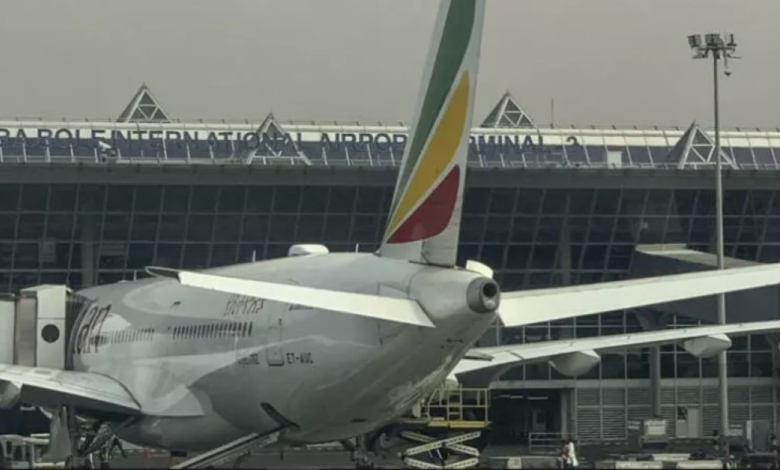
This announcement comes at a time of rapid growth for Ethiopian Airlines, which is the largest national carrier in Africa in terms of fleet size and number of destinations. The existing Bole International Airport, located in the heart of the capital, is under significant pressure, with a maximum capacity of approximately 25 million passengers annually, making it unable to keep pace with the airline's ambitious expansion plans under "Vision 2035." The new airport aims to accommodate future growth and transform Ethiopia into a major transit hub connecting Africa, Asia, Europe, and the Americas.
Integrated infrastructure and a billion-dollar cost
The project is estimated to cost around $12.7 billion, with Ethiopian Airlines financing the majority of the funding. It encompasses more than just the passenger terminal; it also includes the development of state-of-the-art infrastructure to ensure easy access and connectivity. The Prime Minister explained that the plan includes a modern, multi-lane highway and a 38-kilometer high-speed rail line connecting the new airport to the heart of Addis Ababa at speeds between 120 and 200 kilometers per hour.
Economic impact and international partners
This project is expected to have a wide-ranging economic impact, not only by creating thousands of jobs during its five-year construction period, but also by boosting the tourism and logistics sectors. Ethiopia is seeking to attract more foreign tourists despite security challenges in some regions, such as Oromia and Amhara.
In terms of financing, the Bishoftu project has secured a $500 million commitment from the African Development Bank. The Ethiopian government is also in advanced negotiations with major international financial institutions, including the Asian Infrastructure Investment Bank, the European Investment Bank, and the U.S. International Development Finance Corporation, to secure the necessary funding for this ambitious project.