Bahrain's defense ministry announces the destruction of 73 missiles and 91 Iranian drones


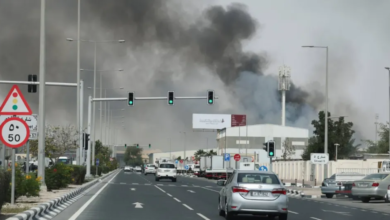
In a significant development reflecting the readiness of military forces in the Arabian Gulf region, the Bahrain Defense Force announced its success in destroying a large number of hostile aerial targets, including 73 missiles and 91 Iranian drones. This announcement underscores the advanced defensive capabilities the Kingdom possesses in countering aerial threats and protecting its regional airspace.
Context of regional tensions and escalating threats
This announcement cannot be viewed in isolation from the tense regional landscape of the Middle East. Recent years have witnessed a marked increase in the use of drones and ballistic missiles as key tools in asymmetric warfare. These weapons are part of the expansionist and influence-seeking strategies pursued by some regional powers, prompting the Gulf Cooperation Council (GCC) states to bolster their defense systems and acquire the latest air interception technologies to safeguard their national security.
The strategic importance of Bahrain's defense readiness
The Kingdom of Bahrain enjoys a vital geostrategic location in the heart of the Arabian Gulf, making the security of its airspace a cornerstone of global energy security and international maritime traffic. The success of the Bahrain Defense Force in neutralizing this large number of missiles and drones (73 missiles and 91 drones) sends a strong deterrent message: Gulf airspace is protected by highly efficient detection and interception systems capable of handling massive and simultaneous attacks.
Technical challenges and the future of air warfare
This event highlights the nature of modern military challenges; warfare is no longer limited to traditional confrontations but has evolved to include remote aerial attacks using drone technology. Countering 91 drones and 73 missiles requires a high degree of coordination between radars and launch platforms, as well as an exceptionally rapid response. Military experts indicate that the success of such operations depends on the integration of air defense systems and close intelligence cooperation among allies in the region.
Impact on regional and international stability
This announcement is expected to resonate widely in international political and military circles. It reaffirms the Gulf states' commitment to defending their sovereignty and regional stability, and reassures international partners and global markets about the continued secure flow of energy supplies. Thwarting such attacks reduces the likelihood of wider conflicts and puts an end to attempts at cross-border destabilization.