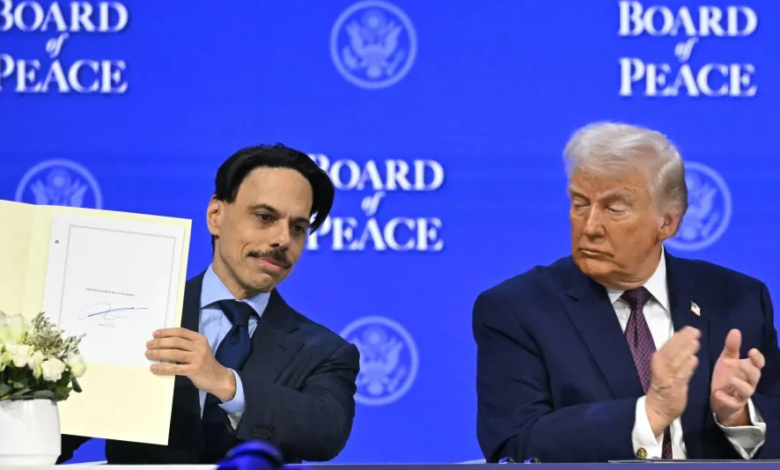
Saudi Arabia signs charter establishing Peace Council to promote global stability

In a strategic move reflecting the Kingdom of Saudi Arabia’s unwavering commitment to supporting international efforts aimed at promoting the values of tolerance and moderation, the Kingdom officially signed the charter establishing the “Peace Council.” This step culminates a series of intensive diplomatic efforts led by Riyadh to enhance international peace and security, and reaffirms its pivotal role as a key player in global decision-making and shaping a more stable future for the region and the world.
Context of the event and the Kingdom's Vision 2030
This signing cannot be viewed in isolation from the major transformations the Kingdom is undergoing under Vision 2030. The Kingdom, long a beacon for Muslims and the heart of the Islamic world, seeks through these agreements to institutionalize its efforts in combating extremism and rejecting violence. Joining the Charter of the Peace Council is an integral part of Saudi Arabia's soft power strategy, which aims to build bridges of cultural understanding with diverse cultures and peoples, and to activate the role of parliamentary and public diplomacy alongside official diplomacy.
The importance and objectives of the Peace Council
The Peace Council represents a vital international platform aimed at mobilizing parliamentary and political efforts worldwide to promote a culture of dialogue. The Kingdom's signing of this charter is significant due to Riyadh's political, economic, and religious influence. Saudi Arabia's presence among the founding or signatory states lends the Council considerable momentum and credibility in international circles, facilitating its work in addressing hotspots of tension and conflict through constructive dialogue and peaceful solutions, rather than confrontation.
Expected regional and international impact
Regionally, the Middle East is facing complex geopolitical challenges that require concerted efforts to mitigate risks and resolve crises. The Kingdom's participation in this council is expected to contribute to strengthening mechanisms for joint Arab and Islamic action and to present impactful initiatives for resolving regional conflicts. Internationally, this step positions the Kingdom among the leading nations in peacemaking and enhances its partnerships with UN and international organizations concerned with human rights and international justice.
In conclusion, Saudi Arabia’s signing of the Charter establishing the “Peace Council” is a clear message to the world that Riyadh is on its way to becoming a capital of peace and tolerance, and that it will spare no effort to achieve global stability, based on a rich historical legacy and an ambitious future vision that places humanity and its well-being at the forefront of its priorities.