
The Ministry of Natural Resources and Environment of Russia's Kemerovo (Kubas) region issued an urgent warning today regarding deteriorating weather conditions, activating what is known in the media and environmental circles as a "black sky" alert in several major industrial cities. The warning includes the city of Novokuznetsk, the Novokuznetsk administrative district, and the city of Prokopyevsk, where this unfavorable weather pattern is expected to persist until February 3, 2026, according to preliminary data.
Warning details and affected cities
The ministry explained in its official statement that current weather conditions will make it difficult for harmful pollutants to disperse in the upper atmosphere, causing them to accumulate near the Earth's surface. Accordingly, strict instructions have been issued to major industrial enterprises in Kemerovo and the surrounding region to take immediate measures to reduce their emissions of gases polluting the atmosphere during this critical period, ensuring that pollution levels do not exceed permissible limits.
What is the “black sky” phenomenon?
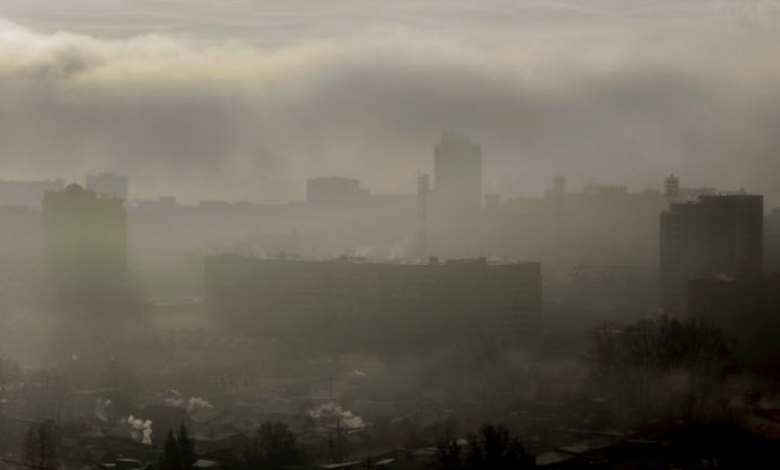
The term “black sky,” or what is scientifically known as “NMU” (Non-Favorable Weather Conditions), refers to a meteorological phenomenon that often occurs in areas with specific geographical features, such as basins and valleys, and coincides with calm winds and a temperature inversion. These factors inhibit vertical and horizontal air movement, trapping smoke, dust, and exhaust fumes from factories and vehicles in a layer close to the ground, forming a dense cloud of smog that negatively impacts visibility and air quality.
The geographical and industrial context of Kemerovo Oblast
These warnings are particularly important given the nature of the Kuzbass region (Kuznetsk Basin), one of the largest coal mining and heavy industrial centers in Russia and the world. The region contains a large number of coal mines and steel and metallurgical plants, making it frequently vulnerable to environmental pollution. The city of Novokuznetsk, in particular, is a major center of the metallurgical industry, making the greenhouse effect of pollutants there more pronounced and severe than in other areas.
Expected health and environmental impacts
During periods of "black skies," Russian authorities typically implement special protocols to protect public health. Residents—especially children, the elderly, and those with respiratory conditions—are advised to minimize their time outdoors, keep windows tightly closed, and avoid strenuous physical activity outside their homes. This phenomenon is a recurring environmental challenge in Siberian industrial cities, prompting the Russian government to continuously develop environmental programs aimed at modernizing factories and reducing reliance on outdated, polluting technologies.