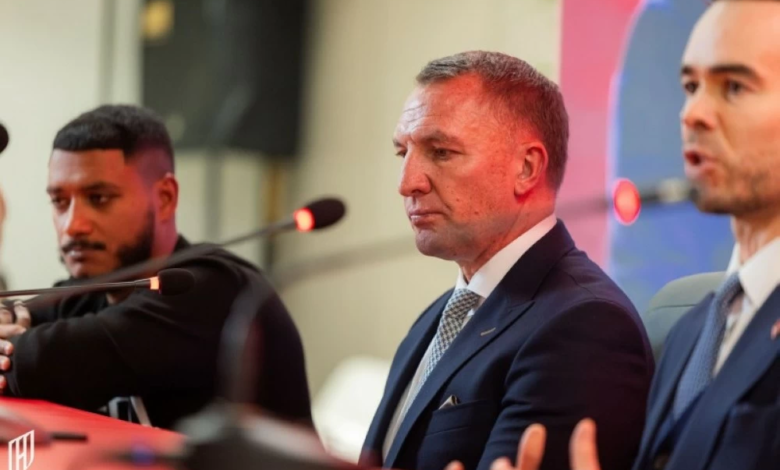
Brendan Rodgers: Modern football demands a sporting director – an important clarification

In an exclusive interview with Okaz newspaper, veteran Northern Irish coach Brendan Rodgers confirmed that the requirements of modern football now necessitate the presence of the “sporting director” position as a fundamental pillar for the success of any football project, noting that this position is no longer a luxury but an urgent necessity to ensure the technical and administrative sustainability of clubs.
Rodgers, who has a distinguished coaching career in the English Premier League and the Scottish League, explained that his previous statements, which may have been misunderstood or reflected a particular phase, are now "a thing of the past," noting that the rapid evolution in the world of football changes convictions and imposes new strategies for work.
The importance of the sports director in the modern administrative structure
Rodgers' comments come at a time when global football is undergoing a significant shift towards greater specialization. The sporting director is considered the vital link between the board and the coaching staff, taking responsibility for long-term planning, recruitment, and academy development, thus allowing the manager to focus entirely on tactical aspects and match management. This model, which Rodgers himself was part of at clubs like Liverpool, Leicester City, and Celtic, has proven successful in Europe's top leagues and has become the benchmark for professional management.
General context and development of the Saudi League
Rodgers' comments cannot be separated from the broader context of sports in the region, specifically the remarkable growth of the Saudi Professional League (the Roshan League). Saudi Arabia has witnessed unprecedented sporting activity as part of its Vision 2030, attracting a host of world-class players and top-tier coaches, in addition to appointing international sporting directors (such as Michael Emenalo) to oversee the league's strategy. This radical transformation has led many international coaches to reassess their perceptions of the region, acknowledging the project's quality and seriousness.
The impact of administrative professionalism on the future of clubs
Adopting the concept of a sporting director with clear responsibilities contributes to creating technical stability, preventing teams from experiencing the upheavals that occur when coaches change. A clear recruitment strategy and a defined club identity safeguard achievements and ensure continued competitiveness. Experts believe Rodgers' statement reflects considerable maturity and an understanding of the current football market, where clubs have become massive economic and sporting institutions that can no longer be managed with the individualistic methods of the past.
In conclusion, Brendan Rodgers’ interview with Okaz is further proof that the standards of success in football have become global and unified, and that the correct administrative structure is the first gateway to titles and achievements, whether in European stadiums or in the Middle East, which has become a major player in the international football scene.