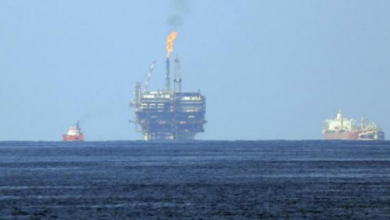

Historic jump in Brent crude prices
Brent crude oil prices surged to record highs on Monday (March 9) in global energy markets, capturing the attention of investors and economic analysts alike. According to data recorded on the first day of trading this week, the crude oil achieved a massive daily gain of 15.953%. Trading indicators revealed that the price broke through to new record levels, with the highest price soaring above the $108 mark, specifically reaching $108.216 per barrel. This reflects an unprecedented buying momentum and sharp market volatility.
Trading session details and financial indicators
The opening session of the week reflected significant buying pressure from traders, with oil prices opening at $107.935 per barrel before settling at a closing price of $107.414. The price difference was approximately 14.778 points, amidst active trading volume of 2.392 million barrels per day. These precise figures clearly indicate an accelerated pace of trading as investors seek to secure their financial positions amidst the rapid changes driven by market conditions.
General context and historical background of oil price fluctuations
Historically, price jumps exceeding 15% in a single day only occur amidst major geopolitical events or severe crises threatening global supply chains. These surges are reminiscent of past crises, such as the geopolitical tensions of 2022 that pushed oil prices above $120, and before that, the global financial crisis of 2008. Such price spikes are typically linked to genuine concerns about supply shortages from major producing countries, strategic decisions by the OPEC+ alliance, or disruptions affecting shipping lanes. The oil market is inherently highly sensitive to global news, and any threat to energy infrastructure immediately translates into a "risk premium" added to the price per barrel.
Expected impact on the local and global economy
This significant rise in Brent crude prices, exceeding $108 per barrel, has far-reaching implications on several levels. Internationally, high oil prices pose a major challenge to global central banks struggling to control inflation. The increased cost of energy directly impacts transportation and industrial production costs, leading to higher prices for basic commodities. Regionally and locally, particularly for oil-exporting countries in the Middle East, these prices represent a significant opportunity to boost government revenues and generate budget surpluses, thus supporting sustainable development plans and financing major projects aimed at economic diversification. Conversely, energy-importing countries face increasing pressure on their budgets and foreign exchange reserves.
A future outlook for energy markets
In conclusion, the trajectory of oil prices remains contingent on developments in the global economic and political landscape. Investors closely monitor demand data from major economies, along with strategic inventory levels. Nevertheless, Brent crude continues to prove itself as the most important barometer of the global economy's pulse, with its trading screens reflecting all the fundamental changes occurring worldwide.