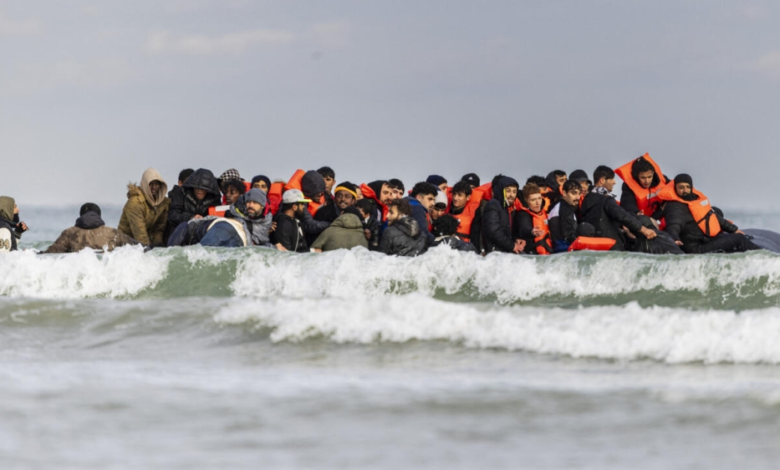
Britain 2025: Second highest number of migrants crossing the English Channel

Official data released by the British government revealed that 2025 saw the second-highest rate of migrants arriving in the UK via small boats in the English Channel since systematic records began in 2018. These figures once again highlight one of the most complex political and humanitarian issues facing London.
Figures approaching record levels
According to UK Home Office statistics published on Thursday, a total of 41,472 people crossed the English Channel from the French coast in 2025. While this figure is slightly lower than the record high of 45,774 in 2022, it clearly indicates that the problem of illegal immigration remains a persistent challenge despite stricter measures.
The data indicated that no small boats were spotted on the last day of the year, December 31, likely due to bad weather conditions that usually deter smugglers from taking risks at this time of year, but the annual toll remains alarmingly high for decision-makers in Westminster.
Historical context and development of the crisis
Before 2018, the phenomenon of small boat crossings did not pose such a significant challenge, with the numbers being very small. As security measures tightened at ports, Channel Tunnel entrances, and on trucks, smugglers and asylum seekers increasingly turned to the perilous sea route using flimsy rubber dinghies. Since then, the numbers have risen dramatically, placing enormous pressure on the UK's asylum system and the infrastructure designed to receive arrivals.
Political dimensions and international cooperation
These figures represent a blow to the British government's efforts, which have made "stopping the boats" a cornerstone of its domestic and foreign policy. Over the past years, Britain has spent hundreds of millions of pounds under bilateral agreements with France to bolster coastal patrols and provide French police with advanced surveillance equipment and drones to prevent boats from leaving.
Despite these efforts, and the strict legislation enacted to criminalize illegal entry and attempts to deport migrants to safe third countries, smuggling networks have proven their ability to adapt to these changes, exploiting the migrants' desperate desire to reach British soil.
Local and humanitarian repercussions
Domestically, this large influx of migrants is placing increasing pressure on British taxpayers, as the government incurs significant costs to house asylum seekers in hotels and temporary accommodation centers while their applications are processed—a process that can take years due to the backlog of cases. From a humanitarian perspective, crossing the English Channel remains one of the world's most dangerous migration routes, with tragic drownings claiming the lives of dozens of men, women, and children. This underscores the need for human rights advocates to establish safe and legal pathways for seeking asylum, rather than focusing solely on security measures.