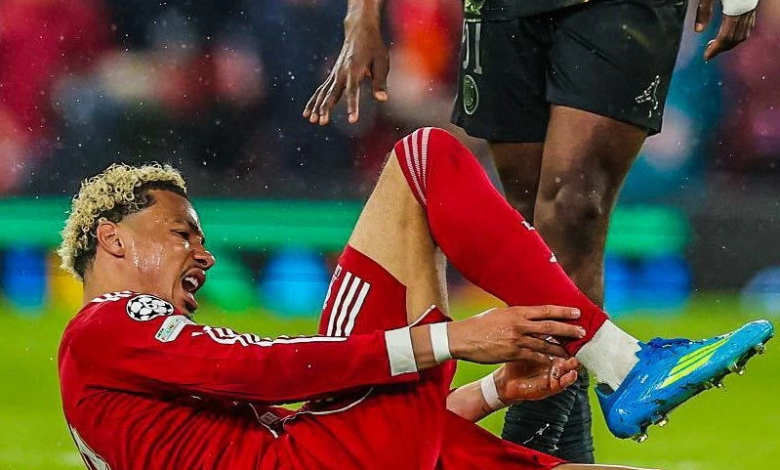

Shock in Liverpool: Ekateke suffers Achilles tendon rupture
Liverpool's coaching staff, led by Dutch manager Arne Slot, suffered a major blow in the Champions League after defender Hugo Ekateke sustained a serious injury during their crucial match against Paris Saint-Germain. Ekateke was unable to continue playing after collapsing in pain, forcing the medical staff to attend to him immediately in the 30th minute of the first half. Unable to continue, Slot made an early substitution, bringing on Egyptian star Mohamed Salah in an attempt to maintain the team's attacking balance in this European encounter.
Medical diagnosis: end of season and injury details
From a medical standpoint, orthopedic and joint physiotherapist Thamer Al-Shahrani revealed alarming details about the player's condition. Al-Shahrani explained that Ektiki's injury is classified as a severe and complex sports injury. Analysis of the fall mechanics and the manner of the injury revealed that the player's foot landed firmly on the ground, resulting in a sudden and violent stretching that directly affected his Achilles tendon. The specialist confirmed that initial indicators and the clinical presentation point to a complete tendon rupture, meaning the player will be sidelined for an extended period of eight to nine months at the very least, officially ending his current season with Liverpool.
General context: The intensity of the competition in the UEFA Champions League
This injury comes amidst the fierce competition of the UEFA Champions League, considered the most prestigious club tournament in the world. Historically, matches between English and French clubs, particularly between giants like Liverpool and Paris Saint-Germain, are characterized by intense rivalry and high physical intensity. This immense physical and mental pressure puts players at risk of serious muscle and joint injuries. Liverpool's history in European competitions is replete with similar incidents, where injuries have played a decisive role in altering the team's trajectory in several previous seasons. This places an additional burden on the medical staff and fitness coaches to manage the players' physical exertion and prevent such setbacks.
The impact of Eketiki's absence on Liverpool both domestically and in Europe
The absence of Hugo Eketién for nearly nine months will have far-reaching consequences for Liverpool's plans. Domestically, in the Premier League, manager Arne Slott will be without a key tactical option for squad rotation, especially given the congested fixture schedule. In Europe, losing a player during the crucial stages of the Champions League increases the pressure on key players, most notably Egyptian star Mohamed Salah, who has once again demonstrated his readiness to shoulder responsibility in difficult times. Internationally, this injury highlights the crisis of fixture congestion in modern football, which is threatening the careers of many prominent players due to accumulated physical fatigue. Achilles tendon injuries, in particular, are among the most challenging obstacles any athlete can face, requiring delicate surgical intervention and a rigorous rehabilitation program to ensure a return to peak physical and technical condition.