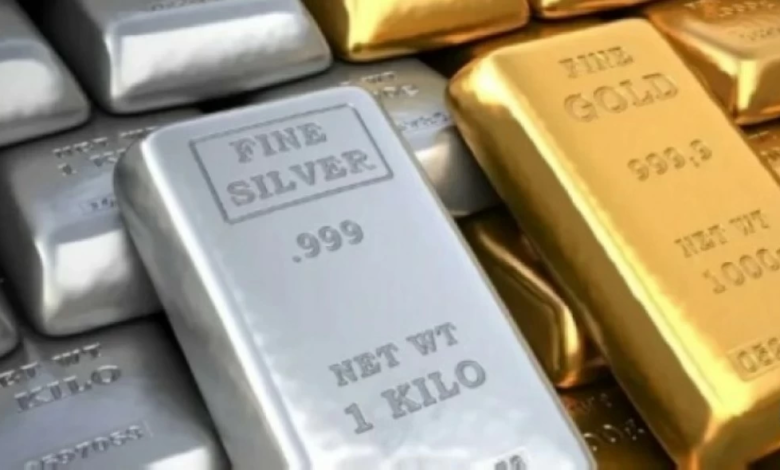

Precious metals markets witnessed a new wave of strong gains in early trading today, with silver futures jumping by as much as 5%, continuing the series of sharp fluctuations and historic gains that characterized trading in 2025. This rise comes amid a state of anticipation in global markets and fundamental changes in the economic landscape.
Exceptional performance for silver and gold
Specifically, silver futures for March delivery rose 5.3% to settle at $74.17 an ounce. With this increase, silver has recorded remarkable gains of 153% since the beginning of the year, making it one of the best-performing assets in the financial markets.
Silver had recorded an unprecedented record high last night, touching the $80 per ounce mark for the first time in history, before these gains quickly faded and the session closed with a sharp decline of 8.7%, the largest daily drop since February 2021, reflecting the intensity of speculation and profit-taking.
Meanwhile, gold managed to recover its losses, with gold futures rebounding from yesterday's sharp decline and rising 1.2% to $4,394.30 an ounce. In the industrial metals sector, copper also performed well, with its futures contracts climbing 1.9% to $5,673 an ounce.
Why are precious metals rising in price?
These price increases are particularly significant given the global economic and geopolitical context. Precious metals, especially gold and silver, play a pivotal role as safe-haven assets for investors during times of uncertainty. Escalating geopolitical tensions in various parts of the world have further enhanced the appeal of these metals, as investors prefer to hedge against potential risks in traditional markets.
Macroeconomic factors and the impact of the dollar
From an economic perspective, gold and silver are considered traditional hedges against inflation, preserving the purchasing power of capital. A weak US dollar also plays a crucial role in this equation; since these metals are priced in dollars, a depreciating US currency makes them cheaper and more attractive to buyers holding other currencies, thus increasing demand and consequently prices.
Furthermore, monetary policy plays a significant role in this momentum, as expectations of central bank interest rate cuts have boosted risk appetite towards non-performing metals (such as those offering coupons or dividends), thus lowering the opportunity cost of holding them. This is compounded by ongoing concerns about supply constraints and supply chains, particularly for silver and copper, which are heavily used in technology industries and the transition to clean energy.